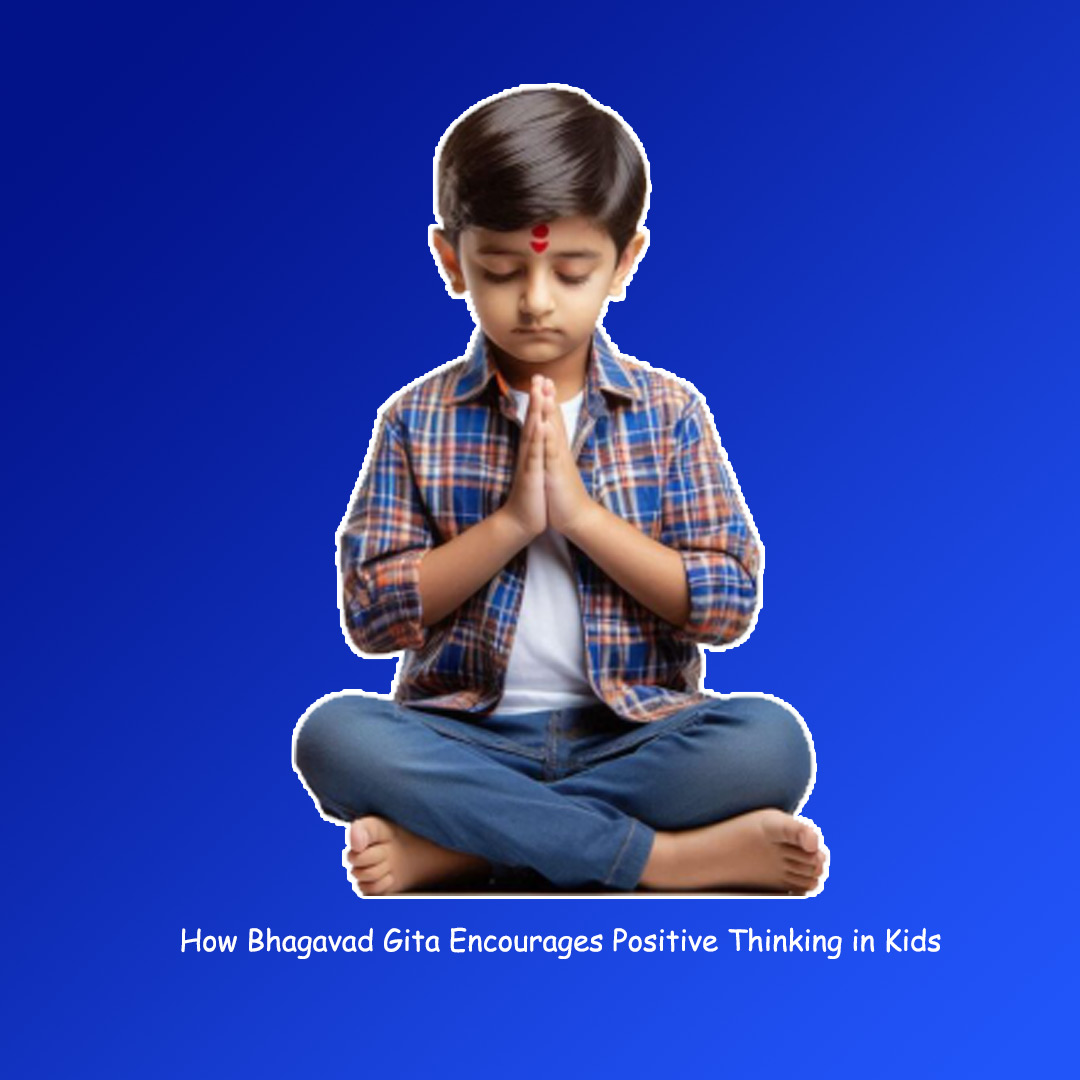
In our competitive and fast-paced world, young people are faced with stress, failure and competition from a very early age. Having guides and mentors to help navigate this level of exposure to stress and competition becomes trivial. Parents and educators must be equipped with methods to help children build resilience, confidence and a healthy positive mindset.
The timeless wisdom of the Bhagavad Gita remains a power source of guidance. Written thousands of years ago, it carries wisdom relevant to every stage and every phase of life.
The Bhagavad is at its surface level, a conversation between Lord Krishna and the young warrior Arjuna. However, the central idea is the transformation of negative to positive thinking and clarity in decision making and thought processing. This makes the Bhagavad Gita a powerful tool for all ages, especially if read deeper than the surface.
The easiest way for kids to understand this better is through guidance from teachers and parents. Listed below are some tolls and lessons to help with this:
The importance of effort rather than result:
Shloka Reference: Chapter 2, Verse 47
“Karmanye vadhikaraste ma phaleshu kadachana,
Ma karma phala hetur bhur ma te sangostva akarmani.”
(You have a right to perform your duty, but not to the fruits of your actions.)
The above shloka guides children to focus on the effort of the task and not worry about the results. The effort is in our hands and can be controlled. The result depends on many external factors that are beyond our control, and we must not be swayed by the results. The results become a bi product of the effort.
A child preparing for an exam should be taught the importance of the process and effort. Small consistent steps add up to big results and this attitude helps young adults to keep growing consistently through their entire life. This attitude reduces anxiety and builds confidence. This mindset helps bring out resilience and healthy growth.
Building emotional stability:
Shloka Reference: Chapter 2, Verse 14
“Matra-sparshas tu kaunteya shitoshna-sukha-duhkha-dah,
Agamapayinah anityas tam titikshasva bharata.”
(Feelings of happiness and distress are temporary; they come and go.)
Children and young adults must be taught that emotions are temporary and manageable. This learning will help them develop a strong mind that will help them with mental and emotional balance in life. The understanding that no emotion is to become an attachment and thought of as a permanent state. Emotions are fleeting and must be dealt with in the present.
A child who loses a match must understand that disappointment like all other feelings and emotions will pass. This encourages resilience in them, which will carry them far in the journey of life.
Encourage Self – Belied and Inner Strength:
Shloka Reference: Chapter 6, Verse 5
“Uddhared atmanatmanam natmanam avasadayet,
Atmaiva hy atmano bandhur atmaiva ripur atmanah.”
(Raise yourself by your own mind; do not degrade yourself. The mind can be your friend or enemy.)
This shloka explains the importance of being your own cheerleader and biggest support in a world that can be very cutthroat in competition. Children should be taught to develop positive self-talk and nurture self-confidence.
A student struggling with homework or having difficulty in a subject should be encouraged to develop a growth mindset that tunes in to self-encouragement instead of negative self-talk or feeling depressed.
Acceptance and Contentment:
Shloka Reference: Chapter 4, Verse 22
“Yadriccha-labha-santushto dvandvatito vimatsarah…”
(Content with what comes naturally, free from envy.)
Comparison is an enemy at all ages and must be nipped in the bud. Comparison in children does not create a healthy environment to grow or reach their potential. Children should be taught the importance of developing gratitude.
Instead of comparing grades or performances with their peers, children should learn to appreciate their own growth and effort put in toward that growth.
Developing Responsibility and Dharma (Right choice):
Shloka Reference: Chapter 3, Verse 19
“Tasmad asaktah satatam karyam karma samachara…”
(Perform your duty sincerely without attachment.)
Teaching children the importance of doing the right thing even when it seems difficult is a very powerful teaching/ learning. This helps one exercise and practice dharma.
A child choosing to practice honestly even in a difficult situation will do much more in preparing that child for a successful life than any other form of preparation can.
Befriending Failure instead of fearing it:
Shloka Reference: Chapter 2, Verse 50
“Buddhi-yukto jahatiha ubhe sukrita-dushkrite…”
(A person with wisdom remains balanced in success and failure.)
Children should understand that failure is a part of growth. Every successful invention or venture in this world has had a path that had failure in it. If every time a person failed, they gave up, we would live in a very different world. A world that would not have many of the comforts and conveniences we enjoy.
Failing in a performance becomes an opportunity to learn and grow rather than a source of fear. When children develop this attitude, they become achievers.
Discipline and Mind control:
Shloka Reference: Chapter 6, Verse 26
“Yato yato nischalati manas chanchalam asthiram,
Tatas tato niyamyaitad atmanyeva vasham nayet.”
(Whenever the mind wanders, bring it back under control.)
Children should be exposed to ideas of focus, discipline and emotional control at early ages in order to help them develop a mindset that’s steady and balanced rather than a flighty mind that’s easily distracted. Being able to focus helps one block out all the unnecessary noise and streamline into what is important.
Role of Parents and Mentors:
Shloka Reference: Chapter 3, Verse 21
“Yad yad acharati shreshthas tat tad evetaro janah…”
(Whatever great people do, others follow.)
Children are very impressionable and they imitate adults around them. Behaviour can be demonstrated.
Calm and patient parents raise calm and patient children. Parent s and teachers must be conscious or the impression they are making on the young people around them. Language, actions and emotional balance are mimed easily by young people.
Kindness and compassion:
Shloka Reference: Chapter 12, Verse 13
“Adveshta sarva-bhutanam maitrah karuna eva cha…”
(One who is kind, compassionate, and free from hatred is dear to God.)
Encourage empathy and positive relationships. Helping a friend in need, sharing with others and being empathetic by stepping into another’s shoes to understand their opinions or perspectives will carry one far in life and create a healthy environment to grow and flourish The Bhagavad is a timeless source of knowledge and can be tapped into at every stage of life to seek answers or guidance.
Shape Your Kid's Future with Bambinos Classes | World’s first Bhagavad Gita course for Kids | Click here to Book a Free Class Limited time offer.
About the Author

Jyotsna Krishnadev
AuthorJyotsna Krishnadev is a passionate educator, a design aficionado, an ardent reader, a passionate writer and a storyteller at heart. She is the author of Hot Air Balloon, a book that takes readers on a journey of discovery and adventure, much like the one her words often embark on. With a sharp eye for detail and an insatiable curiosity about the world, she has made her mark as a thought leader in the realms of design, art, culture, and the intricacies of life. Her voice resonates through the pages of esteemed architectural magazines, local publications, and newspapers, where she pens articles and opinion pieces that challenge perspectives and spark dialogue. A firm believer that words can shape the world, Jyotsna finds inspiration in every corner of life. She uses her writing to explore the intersection of creativity and life, weaving together her love for literature, her passion for design and her reflections on culture.
LinkedIn Profile ↗