Krishna’s divine mantras: Powerful chants for devotion and peace
Discover powerful Krishna mantras like Hare Krishna and Om Namo Bhagavate Vasudevaya, with meanings, Gita verses and simple chanting tips for peace and focus.
Real strategies. Tested in live classes. Written by teachers, not algorithms. Browse 600+ guides on spoken English, Bhagavad Gita wisdom, math fluency, and confident parenting built for Indian children ages 4 to 15.
Explore 15 fun STEM activities for kids to try at home using simple household materials. Help children learn science, technology, engineering and maths through hands-on projects.
 By Preeti Kapur
Discover powerful Krishna mantras like Hare Krishna and Om Namo Bhagavate Vasudevaya, with meanings, Gita verses and simple chanting tips for peace and focus.
Explore the top 5 online classes for kids in Canada in 2026. Compare subjects, age groups, and formats with safety, friendly teachers, and interactive learning.
Explore the 10 best online math programs for kids in the USA for 2026. Compare features, class formats, and safe, friendly learning environments for your kid.
Compare Unbox English by Bambinos.live vs PlanetSpark on age range, English skills, class formats, and curriculum to choose the right online English program for your kid.
Explore the top 10 Sanskrit slokas for kids with Sanskrit verses, pronunciation, meanings, and values that kids can understand and apply in daily life.
United States parent testimonial on Little Yogi Bhagavad Gita classes and her daughter’s active participation, confidence, and connection with Indian culture.
10 Math Olympiad preparation tips for kids covering maths basics, problem-solving, logical reasoning, daily practice, time management, mistakes, and exam preparation.
Is chess good for a 7-year-old? Explore chess benefits, beginner tips, and live online chess classes for kids to help Little Grandmasters build strong chess skills.
Sharad Navratri 2026 begins October 11 in the Ashwin month. Get the 9 days, Navadurga names, colours, traditions, Golu, dates, significance, puja and wishes.
Dussehra is also known as Vijayadashami or Dasara, is on October 20, 2026. Explore its history, significance, rituals, puja muhurat, celebrations, and wishes.
Improve your child's mental math skills with calculation techniques, regular practice, number games, and everyday activities that support confident problem-solving.
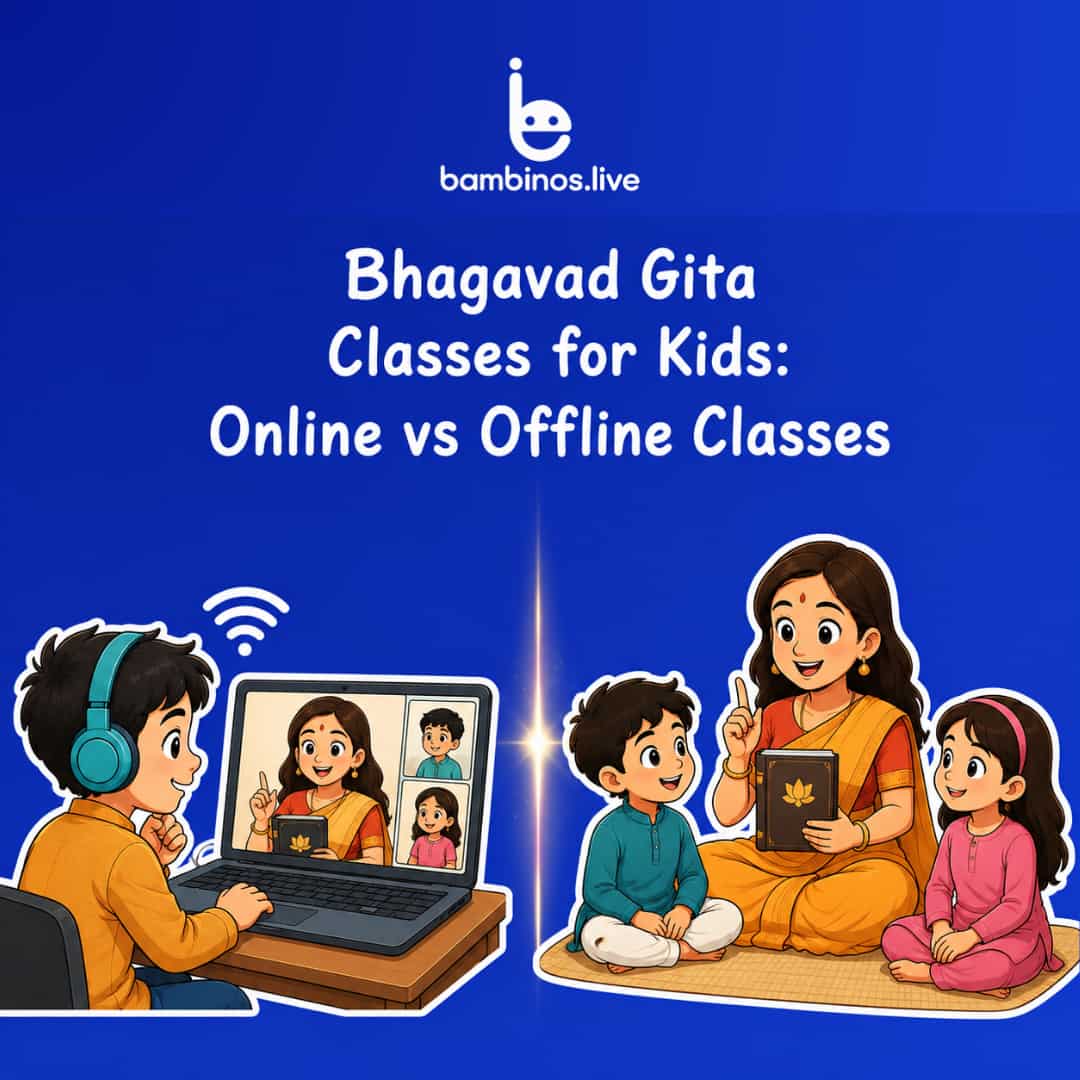
Compare both online and offline Bhagavad Gita classes for your kids, including teaching methods, activities, flexibility, and factors parents can consider.
Page 1 of 57 · 678 articles
The six things parents type into Google or ChatGPT before they ever click "Book Demo." Honest, specific answers no marketing fluff. If yours isn't here, just write to us.
Ask us anythingBambinos.live offers live online programs such as Unbox English, Unbox Math, Unbox Science, and Little Yogi. Each course is designed for a specific age group and uses interactive lessons, activities, stories, and teacher-led sessions to make learning engaging and meaningful for children.
Children from preschool, nursery, and kindergarten through school age and the teenage years can join Bambinos.live courses. Each program is designed around the learner’s age, level, and needs. Younger children learn through stories and activities, while older students work on concepts and skills suited to their learning stage and interests.
Bambinos.live classes are 100% live online sessions where children can interact with teachers, ask questions, participate in activities, and receive guidance during class. Courses such as Unbox English, Unbox Math, Unbox Science, and Little Yogi use live teaching to encourage participation. This format allows teachers to respond to students and address questions during the lesson.
Children can develop academic and life skills through different Bambinos.live courses. Unbox English focuses on English communication, Unbox Math develops mathematical understanding, and Unbox Science introduces scientific concepts. Little Yogi teaches Bhagavad Gita, Sanskrit, values, and life lessons, giving children opportunities to learn concepts and connect them with everyday experiences.
Little Yogi is Bambinos.live’s program for children aged 4 to 14, focused on Bhagavad Gita and Sanskrit learning. Children learn through shlokas, stories, chanting, discussions, and activities suited to their age. The program connects Gita teachings, values, and life lessons with everyday situations at home, school, and with those around them.
Parents should choose a Bambinos.live course based on their child’s age, interests, learning goals, and current level. Unbox English, Unbox Math, Unbox Science, and Little Yogi have different learning focuses and age groups. Parents can review each program’s curriculum, class format, and learning objectives before selecting the course that fits their child’s interests and educational needs.