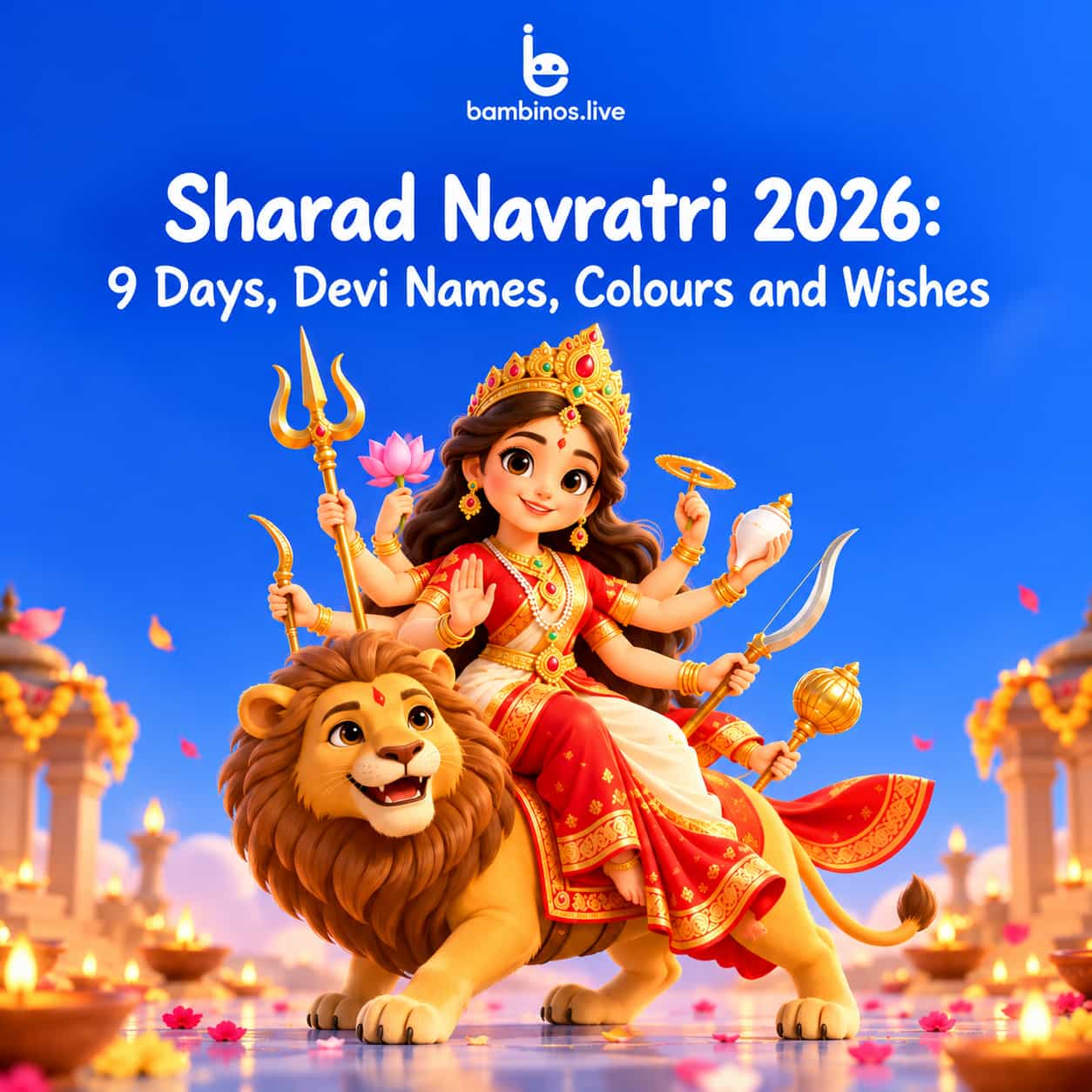
Sharad Navratri 2026 begins on Sunday, October 11 and the nine Navratri days continue through October 19, followed by Vijayadashami on October 20. The festival is dedicated to Goddess Durga and her nine forms, known as Navadurga. The first day is associated with Maa Shailputri and the traditional Navratri colour for 2026 begins with orange.
Sharad Navratri is celebrated across India through prayers, puja, fasting and regional traditions. Gujarat is known for Garba and Dandiya, West Bengal for Durga Puja, and South India for traditions such as Golu Bommai. Families also observe the festival through devotional activities, cultural celebrations and traditional practices.
The nine forms of Goddess Durga are Shailputri, Brahmacharini, Chandraghanta, Kushmanda, Skandamata, Katyayani, Kalaratri, Mahagauri and Siddhidatri. The colours and customs associated with Navratri can vary across regions and families.
Why do we celebrate Sharad Navratri?
We celebrate Sharad Navratri to worship Goddess Durga and her nine forms. The festival honours Shakti, or divine feminine power, through nine days of prayer and devotion. Many Hindu traditions also associate Sharad Navratri with Goddess Durga's victory over Mahishasura.
The word Navratri means "nine nights." During these nine days, devotees may observe fasting, perform puja, visit temples and take part in cultural activities.
Different regions of India are known for different Navratri traditions. Gujarat is famous for Garba and Dandiya, West Bengal is known for Durga Puja, while several South Indian communities celebrate Navratri with traditional doll displays and other regional customs.
Which are the 9 days of Navratri?
The nine days of Navratri are the first nine days of the Sharad Navratri observance. In 2026, the nine Navratri days begin on October 11 and continue through October 19, while Vijayadashami falls on October 20.
Day 1 - October 11: Pratipada - Shailputri Puja
Day 2 - October 12: Dwitiya - Brahmacharini Puja
Day 3 - October 13: Tritiya - Chandraghanta Puja
Day 4 - October 14: Chaturthi - Kushmanda Puja
Day 5 - October 15: Panchami - Skandamata Puja
Day 6 - October 16: Shashthi - Katyayani Puja
Day 7 - October 17: Saptami - Kalaratri Puja
Day 8 - October 18: Saptami continues
Day 9 - October 19: Ashtami - Durga Ashtami, Mahagauri Puja, Sandhi Puja and Maha Navami
Vijayadashami - October 20: Navami - Navami Homa, Navratri Parana and Vijayadashami
Note: Hindu lunar tithis do not always align exactly with calendar dates. In 2026, Saptami extends across October 17 and October 18, while October 19 includes Ashtami and important Durga Ashtami and Maha Navami observances. Exact timings can vary by location.
9 Days of Navratri: Devi Names
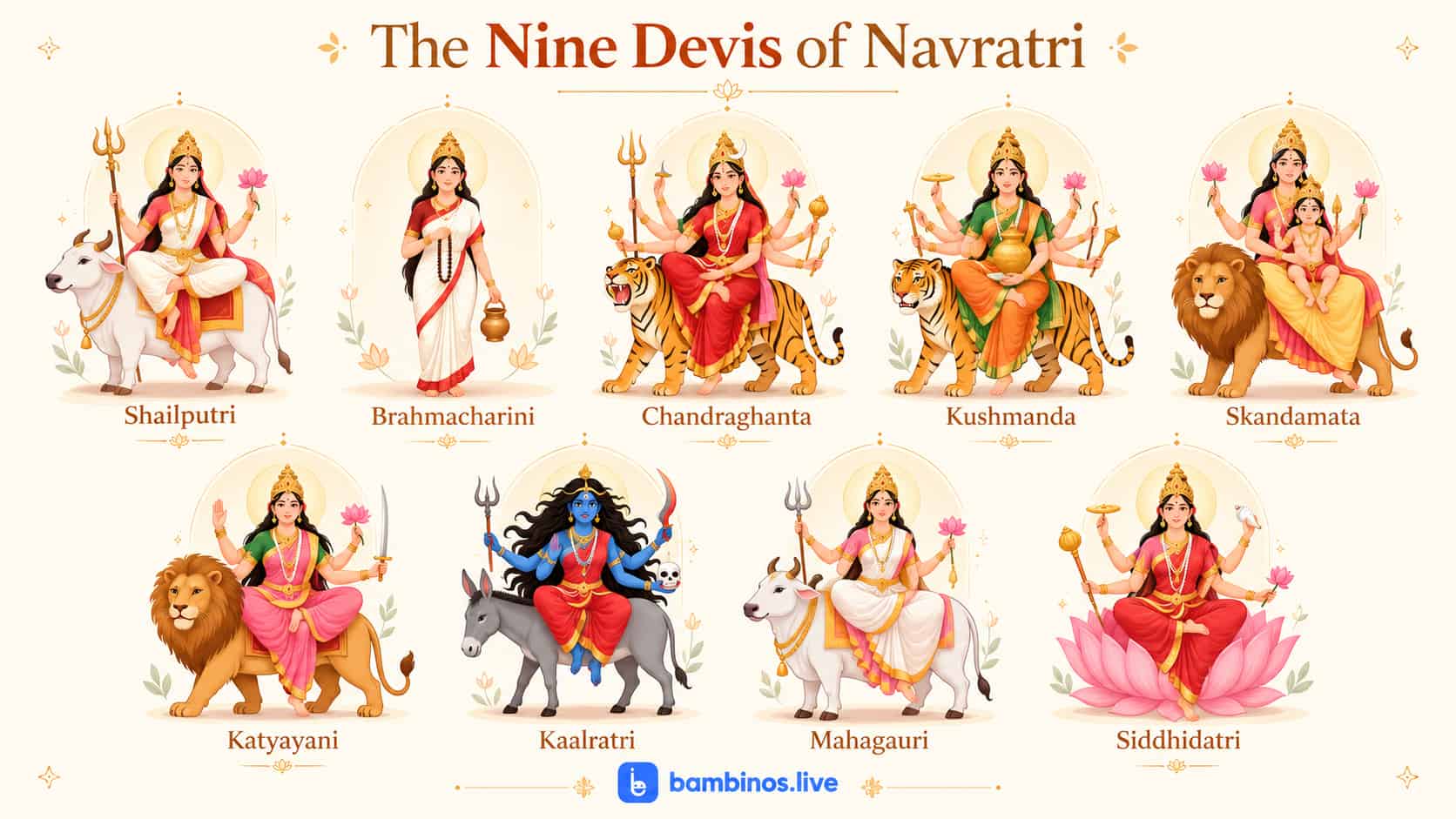
The nine forms of Goddess Durga worshipped during Navratri are known as Navadurga. The nine forms are Shailputri, Brahmacharini, Chandraghanta, Kushmanda, Skandamata, Katyayani, Kalaratri, Mahagauri and Siddhidatri.
The traditional order of the nine forms remains the same even when lunar tithis overlap across calendar dates in a particular year.
Day 1: Maa Shailputri
Maa Shailputri is the first form of Goddess Durga worshipped during Navratri. She is traditionally described as the daughter of the Himalayas and is associated with strength, devotion and nature. She is commonly depicted riding a bull and holding a trident and lotus.
Day 2: Maa Brahmacharini
Maa Brahmacharini is the second form of Goddess Durga worshipped during Navratri. She represents devotion, penance and spiritual discipline. She is traditionally depicted carrying a rosary and a kamandalu.
Day 3: Maa Chandraghanta
Maa Chandraghanta is the third form of Goddess Durga worshipped during Navratri. She is traditionally depicted with a half-moon on her forehead shaped like a bell, or ghanta, which gives her the name Chandraghanta. She represents courage, peace and protection.
Day 4: Maa Kushmanda
Maa Kushmanda is the fourth form of Goddess Durga worshipped during Navratri. Hindu tradition associates her with the creation of the universe and the cosmic energy that sustains it. She is traditionally depicted with eight arms.
Day 5: Maa Skandamata
Maa Skandamata is the fifth form of Goddess Durga worshipped during Navratri. She is known as the mother of Skanda, also known as Kartikeya. She represents motherhood, compassion and protection.
Day 6: Maa Katyayani
Maa Katyayani is the sixth form of Goddess Durga worshipped during Navratri. She is associated with courage and strength and is traditionally worshipped as a powerful form of the Goddess. She is commonly depicted with four arms and riding a lion.
Day 7: Maa Kalaratri
Maa Kalaratri is the seventh form of Goddess Durga worshipped during Navratri. She is traditionally represented as a fierce form of the Goddess who protects devotees and removes fear and darkness. Her form represents strength and protection.
Day 8: Maa Mahagauri
Maa Mahagauri is the eighth form of Goddess Durga worshipped during Navratri. She is associated with purity, peace and compassion. She is traditionally depicted in a serene form and is commonly shown wearing white.
Day 9: Maa Siddhidatri
Maa Siddhidatri is the ninth form of Goddess Durga worshipped during Navratri. She is associated with spiritual wisdom and siddhis, which are described in Hindu traditions as spiritual accomplishments. Her worship is associated with the final day of the traditional Navadurga sequence.
Which color to wear on 9 days of Navratri?
A popular Navratri tradition, especially followed in Maharashtra and Gujarat, associates a different colour with each Navratri day. In 2026, the sequence begins with orange because the first day of Navratri falls on a Sunday.
Day 1: Orange
Orange represents warmth, energy and enthusiasm. Devotees can wear orange on the first day of Navratri as part of this colour tradition.
Day 2: White
White represents purity, peace and innocence. Devotees can wear white on the second day as part of the traditional Navratri colour practice.
Day 3: Red
Red represents passion, love and energy. Devotees can wear red on the third day of Navratri.
Day 4: Royal Blue
Royal blue represents richness and tranquillity. Devotees can wear royal blue on the fourth day of Navratri.
Day 5: Yellow
Yellow represents optimism, happiness and joy. Devotees can wear yellow on the fifth day of Navratri.
Day 6: Green
Green represents nature, growth, peace and new beginnings. Devotees can wear green on the sixth day of Navratri.
Day 7: Grey
Grey represents balance and calmness. Devotees can wear grey on the seventh day of Navratri.
Day 8: Purple
Purple represents nobility, dignity and spiritual reflection. Devotees can wear purple on the eighth day of Navratri.
Day 9: Peacock Green
Peacock green represents freshness and individuality. Devotees can wear peacock green on the ninth day of Navratri.
The nine-colour sequence is a popular tradition and can vary across regions, families and calendars.
Golu During Navratri
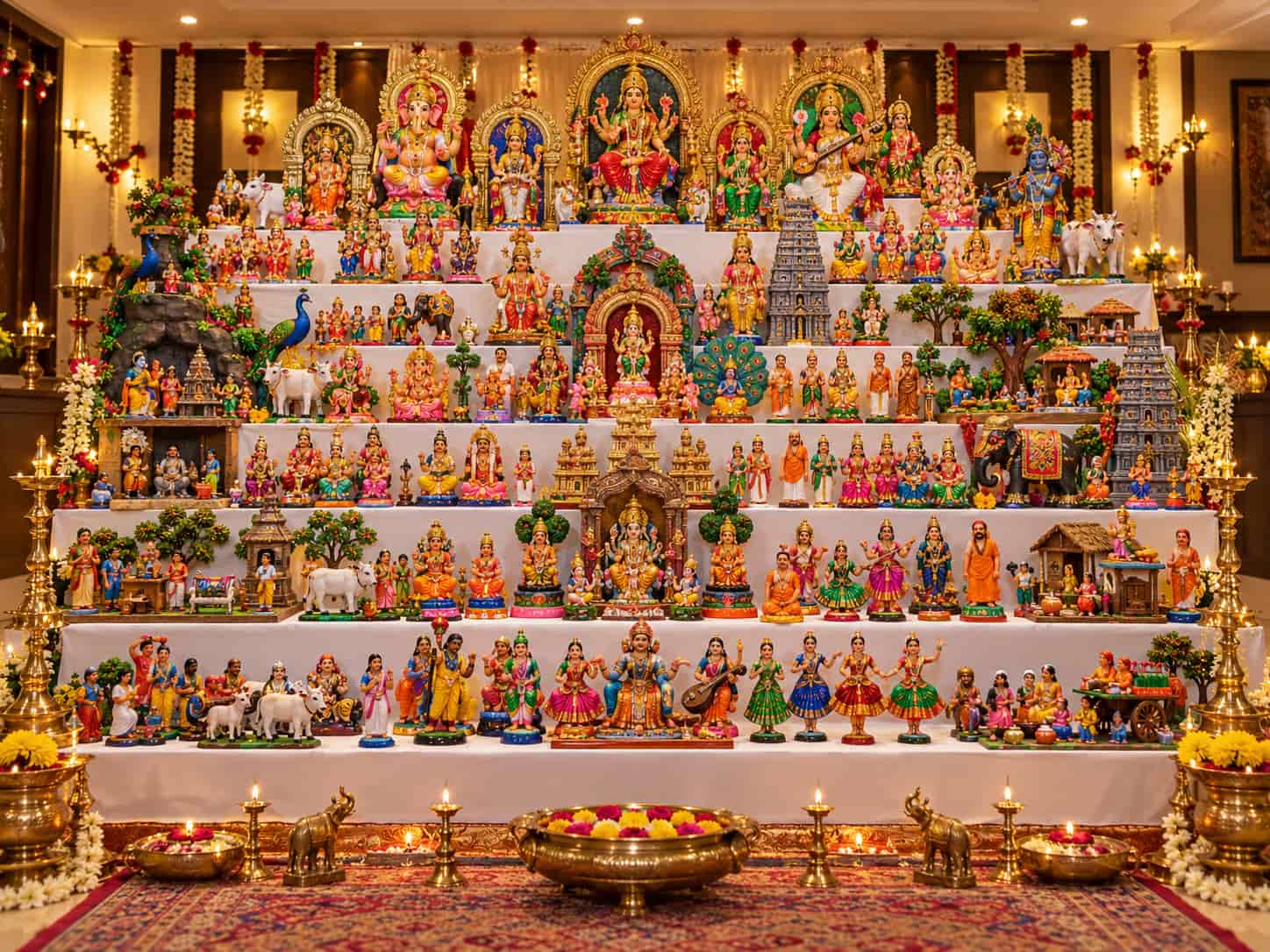
Golu is a traditional display of dolls and figurines during Navratri, especially popular in South India. Families arrange dolls on decorated tiered steps, often featuring Hindu deities, scenes from the Ramayana and Mahabharata, saints, animals, village life and other cultural themes.
The tradition is known by different regional names. It is commonly called Golu Bommai in Tamil Nadu, Gombe Habba or Bombe Habba in Karnataka, and Bommala Koluvu in Andhra Pradesh and Telangana.
Families often decorate the Golu with lamps, flowers and rangoli and invite relatives, friends and neighbours to visit during Navratri.
Navratri wishes in different languages
Hindi Navratri wishes
- नवरात्रि की हार्दिक शुभकामनाएँ। माँ दुर्गा का आशीर्वाद आपके परिवार में सुख, शांति और समृद्धि बनाए रखे।
- आप सभी को शारदीय नवरात्रि की हार्दिक शुभकामनाएँ। माँ दुर्गा आपके जीवन में सुख, शांति और सफलता लेकर आएँ।
- माँ दुर्गा की कृपा आपके परिवार पर सदैव बनी रहे। आप सभी को नवरात्रि की मंगलमय शुभकामनाएँ।
- नवरात्रि के पावन अवसर पर आपको और आपके परिवार को सुख, शांति और समृद्धि की शुभकामनाएँ।
- माँ दुर्गा के नौ रूप आपके जीवन में भक्ति, ज्ञान और आनंद लेकर आएँ। आपको नवरात्रि की हार्दिक शुभकामनाएँ।
Bengali Navratri wishes
- শারদীয়া নবরাত্রির আন্তরিক শুভেচ্ছা। মা দুর্গার আশীর্বাদে আপনার পরিবারে সুখ, শান্তি ও সমৃদ্ধি বিরাজ করুক।
- মা দুর্গার আশীর্বাদে আপনার জীবন আনন্দ, শান্তি ও ভালোবাসায় পূর্ণ হোক। শারদীয়া নবরাত্রির শুভেচ্ছা।
- নবরাত্রির পবিত্র দিনে আপনার ও আপনার পরিবারের জন্য রইল আন্তরিক শুভেচ্ছা। মা দুর্গা সকলের মঙ্গল করুন।
- মা দুর্গার কৃপায় আপনার পরিবারে সুখ ও শান্তি বজায় থাকুক। আপনাকে ও আপনার প্রিয়জনদের নবরাত্রির শুভেচ্ছা।
- নবরাত্রির এই পবিত্র উৎসব আপনার জীবনে আনন্দ, ভক্তি ও আশীর্বাদ নিয়ে আসুক। শারদীয়া নবরাত্রির শুভেচ্ছা।
Gujarati Navratri wishes
- નવરાત્રીની હાર્દિક શુભેચ્છાઓ. મા દુર્ગાના આશીર્વાદથી તમારા પરિવારમાં સુખ, શાંતિ અને સમૃદ્ધિ જળવાઈ રહે.
- મા દુર્ગાની કૃપા તમારા જીવનમાં હંમેશા બની રહે. તમને અને તમારા પરિવારને નવરાત્રીની હાર્દિક શુભેચ્છાઓ.
- નવરાત્રીના પાવન પર્વ પર તમારા પરિવારને સુખ, શાંતિ અને આનંદની હાર્દિક શુભેચ્છાઓ.
- મા દુર્ગાના નવ સ્વરૂપોના આશીર્વાદથી તમારા જીવનમાં ભક્તિ, આનંદ અને સમૃદ્ધિ વધે. નવરાત્રીની શુભેચ્છાઓ.
- આ નવરાત્રી તમારા પરિવાર માટે આનંદ અને શાંતિ લઈને આવે. તમને અને તમારા પ્રિયજનોને નવરાત્રીની હાર્દિક શુભેચ્છાઓ.
Marathi Navratri wishes
- नवरात्रीच्या हार्दिक शुभेच्छा. देवी दुर्गेच्या आशीर्वादाने तुमच्या कुटुंबात सुख, शांती आणि समृद्धी नांदो.
- देवी दुर्गेची कृपा तुमच्यावर आणि तुमच्या कुटुंबावर सदैव राहो. नवरात्रीच्या मनःपूर्वक शुभेच्छा.
- नवरात्रीच्या पवित्र पर्वानिमित्त तुम्हाला आणि तुमच्या परिवाराला सुख, शांती आणि आनंदाच्या हार्दिक शुभेच्छा.
- देवीच्या आशीर्वादाने तुमच्या जीवनात आनंद, भक्ती आणि समृद्धी नांदो. तुम्हाला नवरात्रीच्या हार्दिक शुभेच्छा.
- ही नवरात्र तुमच्या कुटुंबासाठी सुख, शांती आणि आनंद घेऊन येवो. नवरात्रीच्या मनःपूर्वक शुभेच्छा.
Tamil Navratri wishes
- அனைவருக்கும் நவராத்திரி தின நல்வாழ்த்துகள். அன்னை துர்கையின் அருளால் உங்கள் குடும்பத்தில் மகிழ்ச்சியும், அமைதியும், வளமும் நிறைந்திருக்கட்டும்.
- உங்களுக்கும் உங்கள் குடும்பத்தினருக்கும் இனிய நவராத்திரி நல்வாழ்த்துகள். அன்னை துர்கையின் அருள் உங்கள் வாழ்வில் என்றும் நிலைத்திருக்கட்டும்.
- நவராத்திரியின் புனித நாட்கள் உங்கள் குடும்பத்திற்கு மகிழ்ச்சியையும், அமைதியையும், நலத்தையும் கொண்டு வரட்டும். அனைவருக்கும் நல்வாழ்த்துகள்.
- அன்னை துர்கையின் ஒன்பது வடிவங்களின் அருளால் உங்கள் வாழ்வில் பக்தியும், ஞானமும், மகிழ்ச்சியும் பெருகட்டும். இனிய நவராத்திரி நல்வாழ்த்துகள்.
- இந்த நவராத்திரி உங்கள் குடும்பத்தில் அன்பும், அமைதியும், மகிழ்ச்சியும் நிறைந்திருக்கட்டும். உங்களுக்கும் உங்கள் அன்புக்குரியவர்களுக்கும் நவராத்திரி நல்வாழ்த்துகள்.
Navratri wishes from Bambinos.live
This Navratri, give your kids a chance to connect with Indian traditions, spiritual teachings and the stories passed down through generations.
Little Yogi by Bambinos.live introduces kids to Bhagavad Gita teachings, Sanskrit, Indian traditions and life values through engaging sessions. The sessions help kids understand the ideas and values behind the stories and celebrations they see around them.
Join 50,000+ learners across the world with Bambinos.live, a brand that was funded on Shark Tank India. Book a free demo with Little Yogi by Bambinos.live.
Wishing you and your family a happy and blessed Navratri filled with peace, joy and devotion.
Frequently asked questions about Sharad Navratri
1. What is the significance of Navratri?
The significance of Navratri is rooted in the worship of Goddess Durga and her nine forms. The festival represents devotion, spiritual discipline and divine feminine power. Many Hindu traditions also associate Navratri with Goddess Durga's victory over Mahishasura. The festival brings families together through prayers, rituals and cultural traditions.
2. What are the nine days of Navratri?
The nine days of Navratri are associated with the nine forms of Goddess Durga, known as Navadurga. The nine forms are Shailputri, Brahmacharini, Chandraghanta, Kushmanda, Skandamata, Katyayani, Kalaratri, Mahagauri and Siddhidatri. Devotees traditionally worship these forms during the Navratri observance.
3. Who are the nine forms of Goddess Durga?
The nine forms of Goddess Durga are Shailputri, Brahmacharini, Chandraghanta, Kushmanda, Skandamata, Katyayani, Kalaratri, Mahagauri and Siddhidatri. Each form has a distinct name, appearance and traditional significance. Devotees worship these nine forms during Navratri.
4. What is the meaning of Navratri?
The meaning of Navratri is "nine nights." The word comes from the Sanskrit terms "nava," meaning nine, and "ratri," meaning night. The festival is observed over nine nights and ten days in many Hindu traditions.
5. When is Sharad Navratri 2026?
Sharad Navratri 2026 begins on October 11 and the nine Navratri days continue through October 19. Vijayadashami falls on October 20. Because Navratri follows the Hindu lunar calendar, some tithis can extend across more than one calendar day.
6. Which colour should we wear on the nine days of Navratri?
The colours to wear on the nine days of Navratri follow a popular day-wise tradition. The commonly followed 2026 sequence is orange, white, red, royal blue, yellow, green, grey, purple and peacock green. Other regions and families may follow different colour traditions.
7. How do people celebrate Sharad Navratri?
People celebrate Sharad Navratri through prayers, puja, fasting, temple visits and cultural activities. Different regions follow different traditions during the festival. Gujarat is known for Garba and Dandiya, West Bengal is known for Durga Puja, and parts of South India are known for Golu and other traditional doll displays.
8. What should children know about Navratri?
Kids should know about the stories, traditions and values associated with Navratri. They can learn about the nine forms of Goddess Durga, the significance of the festival and the ways different regions celebrate it. These stories also introduce kids to Indian cultural traditions and spiritual values.
9. नवरात्रि में कौन-कौन सी देवी की पूजा की जाती है?
नवरात्रि में माँ दुर्गा के नौ रूपों की पूजा की जाती है। इन नौ रूपों के नाम शैलपुत्री, ब्रह्मचारिणी, चंद्रघंटा, कूष्मांडा, स्कंदमाता, कात्यायनी, कालरात्रि, महागौरी और सिद्धिदात्री हैं। भक्त नवरात्रि के दौरान इन नौ रूपों की पूजा और प्रार्थना करते हैं।
10. नवरात्रि में क्या करना चाहिए?
नवरात्रि में भक्त अपनी पारिवारिक और क्षेत्रीय परंपराओं के अनुसार पूजा, प्रार्थना और व्रत करते हैं। कई लोग देवी के नौ रूपों की पूजा करते हैं और मंदिर जाते हैं। परिवार सांस्कृतिक गतिविधियों में भी भाग लेते हैं और रिश्तेदारों तथा मित्रों के साथ नवरात्रि की शुभकामनाएँ साझा करते हैं।
11. What is the difference between Navratri and Dussehra?
The difference between Navratri and Dussehra is that Navratri refers to the nine-night festival dedicated to the Goddess, while Dussehra or Vijayadashami is the concluding festival associated with the Navratri period. Different traditions associate Vijayadashami with the victory of good over evil, including Rama's victory over Ravana and Goddess Durga's victory over Mahishasura.
12. Why is Navratri celebrated for nine days?
Navratri is celebrated for nine nights because the festival is traditionally associated with a nine-night observance dedicated to the Goddess. The nine forms collectively known as Navadurga are traditionally associated with these nine days. Regional customs and the exact tithi observance can vary across communities.
13. What is Golu Bommai?
Golu Bommai is a traditional Navratri doll display that is especially popular in Tamil Nadu and other parts of South India. Families arrange dolls and figurines on decorated steps and may include deities, mythological scenes and cultural themes. Families often invite relatives and friends to view the display during Navratri.
14. Where is Golu Bommai celebrated?
Golu Bommai is especially celebrated in Tamil Nadu, while similar doll-display traditions are followed in Karnataka, Andhra Pradesh and Telangana. The tradition has different regional names, including Gombe Habba or Bombe Habba in Karnataka and Bommala Koluvu in Andhra Pradesh and Telangana. Families follow their own customs for arranging and displaying the dolls.
15. Which festivals are celebrated in the Ashwin month?
Major Hindu festivals celebrated during the Ashwin month include Sharad Navratri, Durga Puja and Vijayadashami (Dussehra). Other important observances include Mahalaya, Karwa Chauth and Kojagari Lakshmi Puja.
About the Author

Bambinos Learning Solutions
AuthorBambinos is India’s #1 online learning platform for kids built by a team of IIM & IIT graduates.
LinkedIn Profile ↗