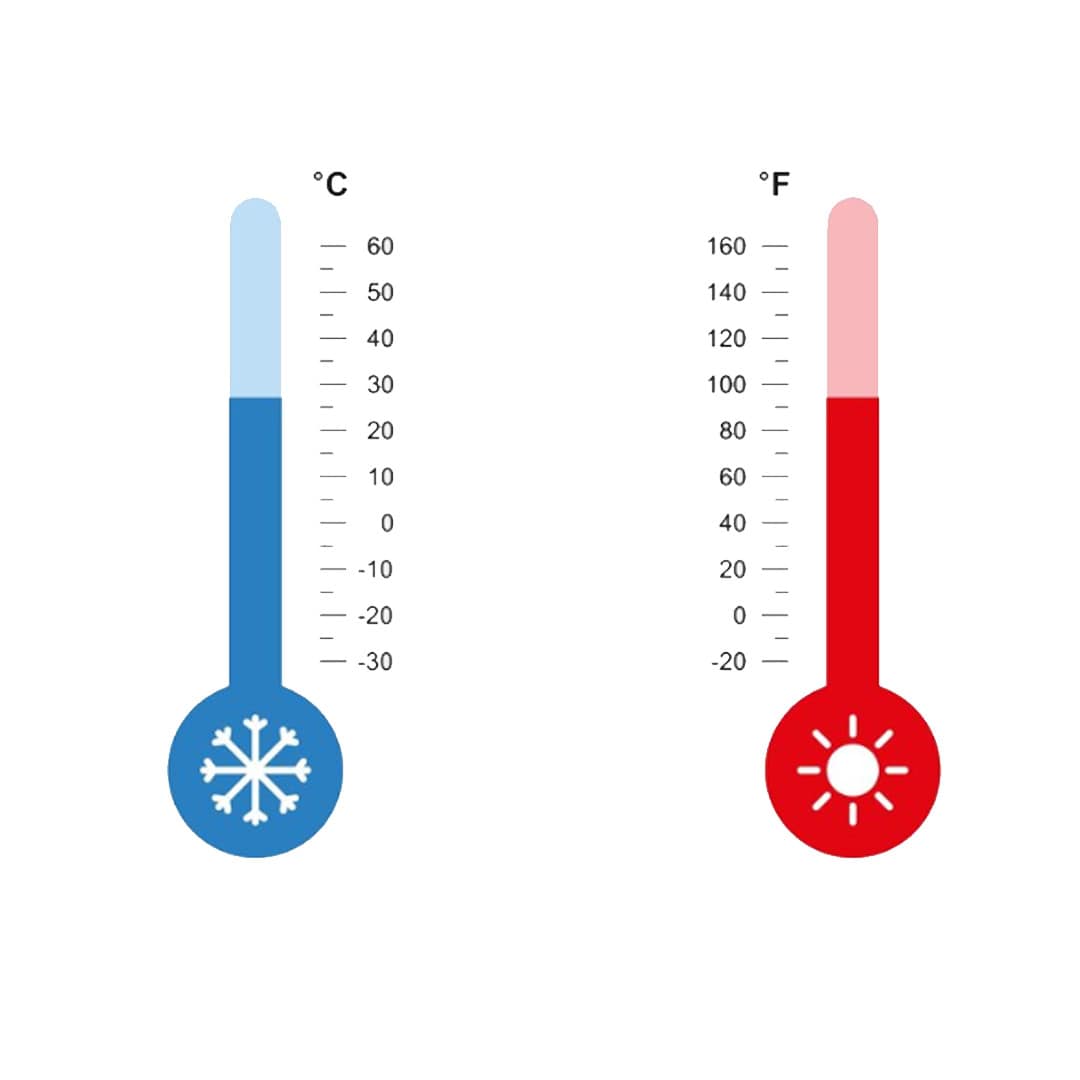
200 degrees Celsius equals 392 degrees Fahrenheit. To convert 200 Celsius to Fahrenheit, multiply the Celsius value by 9/5 and add 32. The calculation is (200 × 9/5) + 32 = 392°F. Both readings represent the same temperature, expressed on two different measurement scales.
Temperature conversion is an important part of school science. Students use it when reading scientific measurements, comparing temperature scales and understanding how heat affects different materials.
How to convert 200°C to Fahrenheit
Celsius (°C) and Fahrenheit (°F) are two scales used to measure temperature. Celsius is commonly used in India and most countries, while Fahrenheit is widely used for everyday measurements in the United States.
The conversion formula is:
°F = (°C × 9/5) + 32
Here, °C represents degrees Celsius and °F represents degrees Fahrenheit.
Let's solve the calculation.
Step 1: Identify the given temperature
The given value is 200°C.
Step 2: Multiply by 9/5
200 × 9/5 = 360
Step 3: Add 32
360 + 32 = 392
Step 4: Write the final answer
200°C = 392°F
The actual temperature remains unchanged. Only its numerical representation differs.
What does 200°C mean in science?
A reading of 200°C represents a temperature well above the normal boiling point of water at standard atmospheric pressure.
Compare these reference points:
|
Scientific reference |
Celsius |
Fahrenheit |
|
Freezing point of water |
0°C |
32°F |
|
Boiling point of water |
100°C |
212°F |
|
Given temperature |
200°C |
392°F |
At standard atmospheric pressure, pure water boils at approximately 100°C. When liquid water is boiling, additional energy is used to change the water into vapour rather than simply increasing the liquid's temperature.
Water vapour can reach higher temperatures under suitable conditions.
This distinction helps students understand that heat and temperature are related but are not identical.
Why does oven temperature matter?
An oven set to 200°C is set to approximately 392°F. This setting is commonly associated with roasting and baking.
When food is placed inside an oven, heat transfers from the hot surroundings to the food.
Several changes may occur:
- Moisture near the surface evaporates.
- The outer layer may become brown through chemical reactions.
- The centre and surface may heat at different rates.
An oven setting of 200°C does not mean the food immediately reaches that temperature. The internal temperature depends on factors such as cooking time, thickness and the type of food.
Science observation: The temperature of an oven and the internal temperature of the food are separate measurements.
Children should not operate ovens or handle heated equipment without adult supervision.
How can kids explore temperature conversion through an oven-setting activity?
Students can investigate temperature scales using printed oven instructions without working with hot equipment.
Activity: Match the temperature cards
Imagine a science teacher gives students four cards.
Three cards show Celsius readings:
- Card A: 180°C
- Card B: 200°C
- Card C: 220°C
The fourth card shows 392°F.
Question: Which Celsius reading matches the Fahrenheit value?
Apply the conversion formula to each card.
Card A:
(180 × 9/5) + 32 = 356°F
Card B:
(200 × 9/5) + 32 = 392°F
Card C:
(220 × 9/5) + 32 = 428°F
Answer: Card B
What can students learn from the results?
Notice that the Celsius readings increase by 20 degrees.
The corresponding Fahrenheit readings increase by 36 degrees.
20 × 9/5 = 36
Students can use this pattern to understand why the two scales do not increase at the same numerical rate.
How to check the conversion using the reverse formula
A useful way to verify the result is to convert 392°F back into Celsius.
The formula is:
°C = (°F − 32) × 5/9
Substitute the Fahrenheit value:
(392 − 32) × 5/9
= 360 × 5/9
= 200°C
The answer matches the original reading.
This reverse calculation can help students identify errors in measurement problems.
Common mistakes in temperature conversion
Mistake 1: Multiplying Celsius by 2
A student might calculate:
200 × 2 = 400°F
This is only a rough estimate, not the correct conversion.
The exact answer is 392°F.
Mistake 2: Forgetting to add 32
Another mistake is stopping after multiplication.
200 × 9/5 = 360
The formula requires one more step:
360 + 32 = 392°F
Mistake 3: Confusing temperature readings with temperature differences
A temperature increase of 20°C corresponds to an increase of 36°F.
20 × 9/5 = 36
When converting a temperature difference, we do not add 32 because the starting-point offset cancels out.
Celsius to Fahrenheit conversion chart
The table below shows selected readings that students may encounter in science worksheets and oven-setting instructions.
|
Celsius |
Fahrenheit |
|
100°C |
212°F |
|
120°C |
248°F |
|
150°C |
302°F |
|
160°C |
320°F |
|
180°C |
356°F |
|
190°C |
374°F |
|
200°C |
392°F |
|
210°C |
410°F |
|
220°C |
428°F |
These are mathematical equivalents. Actual oven controls may use rounded settings, and the temperature inside an oven may vary from the selected value.
Practice questions for kids
Question 1: A science worksheet shows 150°C. What is its Fahrenheit equivalent?
(150 × 9/5) + 32
= 270 + 32
Answer: 302°F
Question 2: An oven instruction card displays 180°C. Convert it into Fahrenheit.
(180 × 9/5) + 32
= 324 + 32
Answer: 356°F
Question 3: Two readings are 180°C and 200°C. What is the difference in Fahrenheit?
First, find the Celsius difference:
200 − 180 = 20°C
Now convert the difference:
20 × 9/5 = 36°F
Answer: 36°F
Question 4: A measuring instrument displays 410°F. Convert it into Celsius.
(410 − 32) × 5/9
= 378 × 5/9
Answer: 210°C
Create your own temperature conversion card
Students can make a reference card in their science notebooks by choosing three Celsius readings and converting them into Fahrenheit.
Try these values:
- 175°C
- 195°C
- 205°C
Use the formula before checking the answers.
Answer key:
|
Celsius |
Fahrenheit |
|
175°C |
347°F |
|
195°C |
383°F |
|
205°C |
401°F |
To check your work, select one Fahrenheit result and convert it back into Celsius.
This activity gives students a chance to work with fractions, multiplication and measurement data.
Conclusion
Converting 200°C into Fahrenheit is straightforward when you know the relationship between the two scales.
°F = (°C × 9/5) + 32
Using this formula, 200°C equals 392°F.
Students can apply the same calculation to other temperatures, check their results using the reverse formula and interpret measurements in school science activities.
To explore heat, temperature and other scientific concepts through live learning, visit Unbox Science by Bambinos.live.
Parents can also explore online learning programs for kids and find a suitable course for their child's interests.
Frequently asked questions
What is 200 degrees Celsius in Fahrenheit?
200 degrees Celsius equals 392 degrees Fahrenheit. The conversion formula is °F = (°C × 9/5) + 32, which accounts for the difference between the two temperature scales. Substituting 200 into the formula gives 360 + 32, resulting in 392°F.
Is 200°C the same as 400°F?
No, 200°C is not exactly the same as 400°F. The correct equivalent is 392°F, while 400°F corresponds to approximately 204.44°C. Some oven instructions use rounded settings, but these temperatures are mathematically different.
Why does the Celsius-to-Fahrenheit formula add 32?
The formula adds 32 because water freezes at 0°C and 32°F at standard atmospheric pressure. Multiplying by 9/5 adjusts for the different sizes of degrees on the two scales. Adding 32 then accounts for the offset between their reference points.
How do you convert 392°F back to Celsius?
To convert 392°F into Celsius, subtract 32 and multiply by 5/9. The calculation is (392 − 32) × 5/9 = 200°C. This reverse conversion confirms that both readings represent the same temperature.
Can children learn temperature conversion through science activities?
Children can learn temperature conversion by comparing readings, solving measurement questions and working with observation tables. They can also use printed oven-setting cards or thermometer data to practise calculations without handling hot equipment. These activities connect mathematics with scientific measurements and reasoning.
About the Author

Anchal Sinha
AuthorAnchal Sinha is a highly motivated lady with an MBA in Finance and Marketing and has worked for three years in this field. After becoming a mother and carrying out the responsibilities of motherhood, she left her career. Thereafter, she planned to be a gratified writer and acquired three years of content writing experience till now. She also worked as a teacher in a school and a retail trainer at ICA Edu Skills Pvt Ltd. Taking forward this experience, she started working as a phonics educator at Bambinos Live. She put in all the efforts to engage kids in her classes. Seeing kids enjoying her class and participating in activities motivates her to work with full vigour. This made her competent to work in altering environments. She puts her 100% into whatever she makes up her mind to pursue. With these potentials, she desires to flourish in anything and everything.
LinkedIn Profile ↗