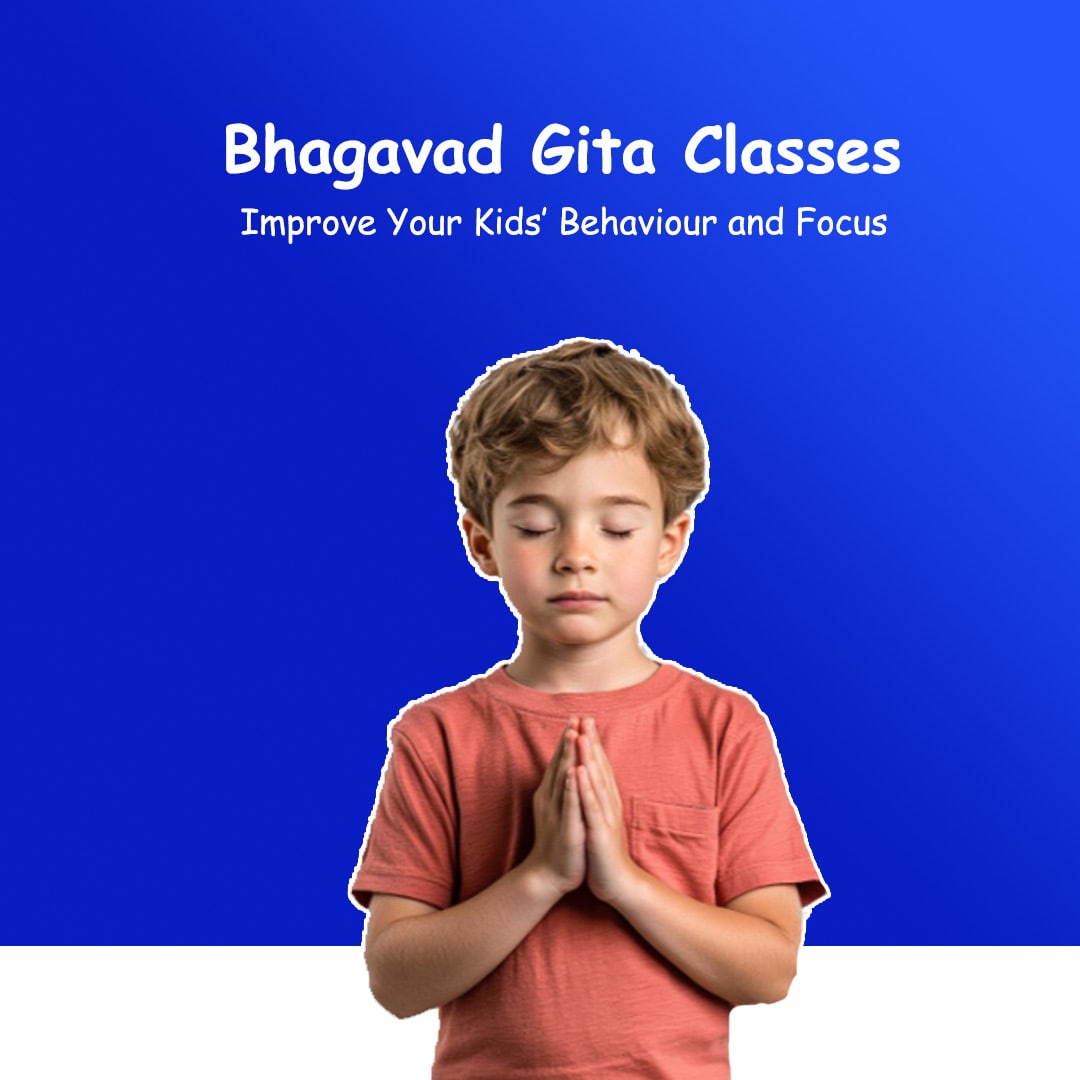
In today’s busy world, children are growing up surrounded by screens, schedules, and constant noise. Many parents notice that their kids struggle with short attention spans, quick anger, stress before exams, or difficulty listening and following instructions. While these challenges are common, parents often wonder: Is there a gentle, meaningful way to help children grow calmer and more focused—without pressure or punishment?
One beautiful answer comes from an ancient source of wisdom: the Bhagavad Gita. When taught in a fun, child-friendly way, Bhagavad Gita classes can help children build strong values, emotional balance, and inner confidence—skills that matter for life, not just school.
Let’s explore how these classes can positively support kids while still keeping learning joyful and relatable.
What Is the Bhagavad Gita (for Kids)?
The Bhagavad Gita is not a textbook or a set of strict rules. For children, it becomes a collection of meaningful life lessons told through stories, conversations, and examples they can understand. In kid-friendly Bhagavad Gita classes, children don’t memorise verses without meaning. Instead, they learn ideas like:
- How to stay calm when things don’t go their way
- Why effort matters more than winning
- How to control anger and frustration
- How to make kind and responsible choices
Teachers often use stories, role-play, real-life situations, and simple discussions, making learning enjoyable instead of overwhelming.
How Bhagavad Gita Classes Improve Children’s Behaviour
1. Helping Kids Understand and Control Emotions
Children feel emotions very strongly—but they don’t always know what to do with them. Anger, jealousy, fear, or disappointment can come out as tantrums, shouting, or silence. Bhagavad Gita classes gently teach children that feelings are normal, but reactions can be chosen. Kids learn to:
- Pause before reacting
- Think calmly instead of acting impulsively
- Express emotions using words instead of anger
Over time, this helps children respond more thoughtfully at home, school, and with friends.
2. Building Responsibility in a Simple Way
The Bhagavad Gita speaks about duty—but for kids, this simply means doing the right thing, even when it’s hard. Through relatable examples, children learn:
- Why finishing homework honestly matters
- How taking responsibility builds trust
- That mistakes are okay if we learn from them
This understanding naturally improves discipline without fear or strict punishment.
3. Improving Focus and Concentration
One of the biggest concerns parents have today is lack of focus. Children often jump from one activity to another, especially with screens around. Bhagavad Gita teachings encourage:
- Focusing on one task at a time
- Giving your best effort without worrying too much about results
- Staying present instead of distracted
When children practice these ideas regularly, their attention span slowly improves—helping both academics and daily routines.
4. Boosting Confidence and Inner Strength
Some children act out because they feel insecure or afraid of failure. Others become very quiet and withdrawn. The Bhagavad Gita teaches children that true strength comes from within. Kids begin to understand:
- It’s okay to fail and try again
- Their value doesn’t depend on marks or comparisons
- Courage grows when we believe in ourselves
This inner confidence reduces anxiety and improves social behaviour.
5. Teaching Kindness, Respect, and Empathy
Good behaviour isn’t just about obedience—it’s about understanding others. Through stories and discussions, Bhagavad Gita classes help children develop:
- Respect for parents, teachers, and elders
- Kindness towards friends and classmates
- Empathy—understanding how others feel
These values shape children into thoughtful, caring individuals.
Why Structured Classes Work Better Than Occasional Lessons
Parents often try to teach values at home, but structured classes offer consistency and expert guidance. Trained educators know how to explain deep ideas in a way children truly understand. Well-designed Bhagavad Gita classes include:
- Age-appropriate language
- Interactive activities and storytelling
- Safe spaces for questions and curiosity
- Regular practice of values
This structure helps lessons turn into habits—not just ideas.
Blending Ancient Wisdom With Modern Learning
Children learn best when lessons feel relevant to their lives. That’s why the most effective programs combine ancient wisdom with modern teaching methods.
When values like calmness, discipline, and empathy are paired with communication skills and confidence-building activities, children learn how to apply wisdom in real life—during exams, arguments, friendships, and family moments.
Platforms like bambinos.live support this kind of holistic growth by helping children practice self-expression, emotional intelligence, and thoughtful communication alongside value-based learning. Together, these approaches reinforce positive behaviour in a natural, lasting way.
Final Thoughts for Parents
So, can Bhagavad Gita classes help improve kids’ behaviour and focus? Yes—when taught in a child-friendly, engaging, and meaningful way. These classes don’t pressure children or force beliefs. Instead, they guide kids toward:
- Emotional balance
- Better focus
- Strong values
- Confidence and kindness
When combined with supportive platforms like bambinos.live, children gain both wisdom and practical life skills, helping them grow into calm, confident, and compassionate individuals.
In a noisy world, giving children tools for inner calm might be one of the greatest gifts a parent can offer.
Shape Your Kid's Future with Bambinos Classes | World’s first Bhagavad Gita course for Kids | Click here to Book a Free Class Limited time offer.
About the Author

Rita Gupta
AuthorRita is an experienced educator specializing in Gita, and English, known for her engaging teaching style and supportive classroom environment. Along with her passion for teaching, she actively writes articles and stories that reflect her creativity and love for learning. Rita focuses on understanding every student’s individual needs, helping them gain confidence, stay motivated, and build a strong academic foundation. Through her guidance, learners develop essential skills and unlock their highest potential. For her, every student is a unique story waiting to be written, and she feels grateful to play even a small part in helping them discover their brightest chapter.