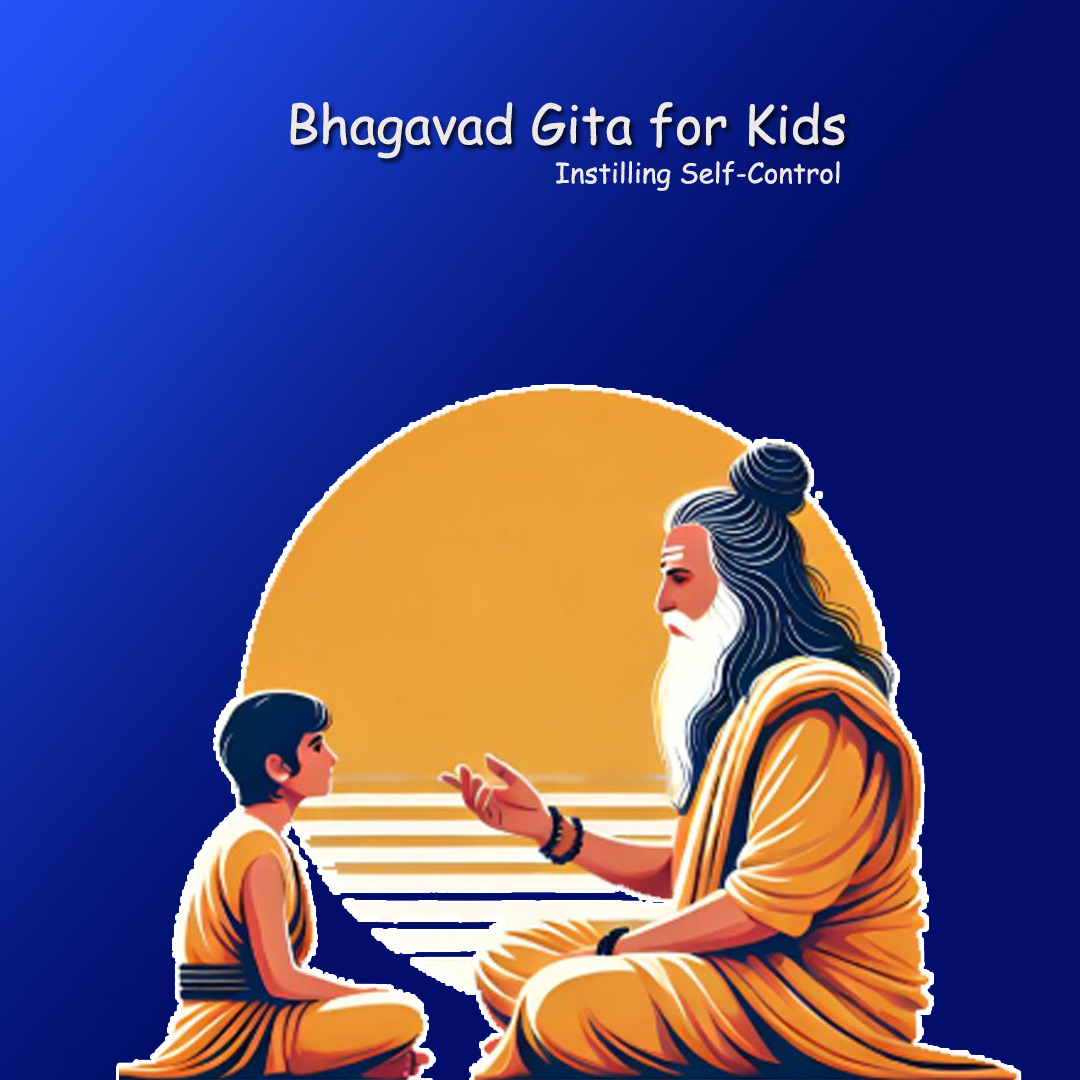
In a world that moves quickly and is filled with distractions, assisting children in developing self-control can matter more than ever. From battling screen time to controlling anger or even practicing discipline in studies, self-control for children is an integral part of their journey towards development and achievement. So, one timely guide that conveys marvelously
What Is Kids Self-Control?
Self-control refers to the ability of an individual to regulate his or her thoughts, feelings and behaviors, particularly in difficult situations. For children, this means:
Being patient when no action is required
Responding with restraint rather than anger
Doing what we’re supposed to do and not getting distracted
Creating intentional plans rather than rash, emotionally-charged actions
They are naturally curious and energetic, but left to their own devices they often cannot regulate themselves. It is here that the Gita wisdom comes extremely
The Bhagavad Gita & Its Major Teachings
Lord Krishna was guiding Arjuna on the right mindset, how to act wisely and stay calm and control the mind.
Check out these key teachings that actually help kids focus, instead:
Control of the Mind
This is one of the strongest teachings in the Gita; your mind can be a best friend or an enemy.
Lesson for kids:
It is how we learn to control our mind and make better choices. But when we allow our mind to wander, it can get us into trouble.
Example for kids:
If a child wants to play rather than complete homework, it is self-control that guides them to do the appropriate thing first.
Practice and Discipline (Abhyasa)
Self-control, the Gita teaches, is not something that snaps into place; it’s cultivated through practice.
Lesson for kids:
And like deciding to master a sport or music, managing emotions and habits requires you to work on them regularly.
Example:
Taking baby steps such as just sitting in silence for 2 minutes a day or doing things on time helps you build up discipline.
Detachment from Immediate Desires
Children tend to seek immediate gratification — whether it’s candy, games or attention. The Gita says try to go beyond design for immediate pleasure.
Lesson for kids:
Not everything we crave right now is beneficial for us. Waiting patiently brings better rewards.
Example:
Studying first, playing later helps to build immense self-control.
Staying Calm in All Situations
The Gita stresses keeping things in balance — whether everything goes your way or not.
Lesson for kids:
Whether winning or losing, praise or criticism—we think much better if we remain calm.
Example:
When a child fails at the game, instead of getting mad, he learns to accept it and go again.
Kids and Mindfulness via the Gita
One of the most beautiful parts of Gita, is that it inherently teaches kids mindfulness.
Mindfulness defined simply is being present and aware of our thoughts and actions.
How Gita Encourages Mindfulness:
Paying attention to actions
Thinking before reacting
Being aware of emotions without letting them take charge
Simple Mindfulness Practices for Kids:
Deep breathing when upset
Chanting simple shlokas
Simply sitting quietly and thinking about your thoughts
Reflecting on daily actions
When taught through engaging Bhagavad Gita classes, these practices aid in developing a calm and focused mind in children.
The Real Benefits of Self-Control in Children
It mirrors in every aspect of their lives when children learn the self-control defined in Gita.
Better Focus in Studies
They are more focused, getting things done without interruption.
Improved Emotional Control
Fewer tantrums, outbursts, and knee-jerk decisions.
Strong Decision-Making Skills
They think first and act second, leading to better decisions.
Healthy Relationships
They learn patience and respect, empathy.
Confidence and Independence
They feel that their acts and emotions are more within their control.
For Parents: Why This Is Important
Teaching discipline without being too strict is one of the biggest challenges as parents.
The power of the Bhagavad Gita teaching for kids is that it imposes no rules — explains why self-control matters.
Instead of saying:
“Don’t do this!”
The Gita teaches:
“Recognize your mind and make the right choice."
Children grow more responsible when they know the purpose behind actions.
How Parents Can Support:
Daily chanting or listening to simple shlokas
Train on stories from Gita into smaller lessons
Appreciate efforts, not just results
Model calm behavior themselves (kids learn by example!)
One of the best Educational Platforms for Kids | Bambinos
Structured classes that take place on online learning platforms like Bambinos allow children to participate with such activities and explore the Gita in an interesting way.
Through:
Storytelling
Interactive sessions
Chanting with gestures (mudras)
Real-life applications
Of course the kids memorize the verses, but they learn how to use them in their lives.
Not a forced habit but a natural evolution of self-control.
A Easy Gita Based Routine For Kids
So here is a proposed daily schedule, made up of Gita sourced inspirations.
In the morning: Read a shloka or three deep breaths.
DAYTIME: You would get patience in a situation
Evening: Reflect — “Did I check my anger or distractions today?”
Bedtime: Practise showing forgiveness
Even this tiny daily effort lays the foundation for self-discipline in
Conclusion In conclusion, the Bhagavad Gita is not just a spiritual text—it’s a life guide that turns children into calm confident and self-conscious human beings. Children can derive the following as they learn and implement its teachings: Self-control Inner peace Better concentration Goodness In a distraction busy world, imparting self-control based on lessons of Bhagavad Geeta is among the best things that tutors could give their child. And when learned in a fun, stimulating way — such as through Bambinos classes — it adds a bonus
Shape Your Kid's Future with Bambinos Classes | World’s first Bhagavad Gita course for Kids | Click here to Book a Free Class Limited time offer.
About the Author

Pratakshi Ashwani Narang
AuthorPratakshi, a seasoned English tutor with over 10 years of experience, has not only excelled in the field of teaching but also made significant contributions as a writer. Her passion for education and love for children are evident in her published works. With a keen eye for detail and a creative flair, Pratakshi's writing style captivates readers of all ages. Her articles on various educational topics have been widely acclaimed for their insightful content and engaging narrative. As an online tutor, Pratakshi seamlessly blends her teaching expertise with her writing skills to create informative and engaging resources for students worldwide. Her dedication to empowering learners shines through in every piece she produces.
LinkedIn Profile ↗