
Class 7 students meet GK mostly in multiple-choice form, in school quizzes, Olympiads and entrance tests. So every question here has four options. The answer and a one-line reason follow straight after, which helps students work out why the wrong options are wrong.
Questions about recent events are dated. They were checked in November 2026.
Science
1. Which gas do plants take in to make their food? (a) Oxygen (b) Nitrogen (c) Carbon dioxide (d) Hydrogen Answer: (c). Plants take in carbon dioxide and give out oxygen during photosynthesis. At night, without sunlight, they only respire, taking in oxygen like we do.
2. What is the SI unit of force? (a) Joule (b) Newton (c) Watt (d) Pascal Answer: (b). It’s named after Isaac Newton. The joule measures energy, the watt power and the pascal pressure.
3. Which organ makes insulin? (a) Liver (b) Kidney (c) Pancreas (d) Heart Answer: (c). Insulin controls the amount of sugar in the blood. When the pancreas doesn’t make enough, a person develops diabetes.
4. Sound travels fastest through: (a) Air (b) Water (c) A vacuum (d) Steel Answer: (d). Particles in solids are packed closely, so vibrations pass between them quickly. Sound can’t travel through a vacuum at all.
5. Which tissue carries water from a plant’s roots to its leaves? (a) Phloem (b) Xylem (c) Stomata (d) Chlorophyll Answer: (b). Phloem carries food the other way, from the leaves to the rest of the plant.
6. A lack of which vitamin causes scurvy? (a) Vitamin A (b) Vitamin B (c) Vitamin C (d) Vitamin D Answer: (c). Sailors on long voyages once got scurvy because they had no fresh fruit. Lemons and limes fixed the problem.
7. Which blood group can donate red blood cells to almost anyone? (a) A positive (b) AB positive (c) O negative (d) B negative Answer: (c). O negative red cells don’t carry the markers that trigger a reaction in other blood groups.
8. About how long does sunlight take to reach Earth? (a) 8 seconds (b) 8 minutes (c) 8 hours (d) 8 days Answer: (b). Light covers about 3,00,000 km every second, and the sun is about 15 crore km away.
9. Which metal is a liquid at room temperature? (a) Mercury (b) Iron (c) Aluminium (d) Copper Answer: (a). This is why mercury was used in old thermometers: it expands evenly as it warms up.
10. Which part of the brain controls balance? (a) Cerebrum (b) Cerebellum (c) Spinal cord (d) Medulla Answer: (b). The cerebellum sits at the back of the head and coordinates movement.
Questions 1 and 4 stick much better once a student has seen the idea in action, which is why Bambinos’ online science classes for kids ask students to run small experiments and explain the results in their own words.
Earth
11. Which mountain range is usually taken as the border between Europe and Asia? (a) Alps (b) Urals (c) Andes (d) Himalayas Answer: (b). The Ural Mountains run north to south through Russia.
12. Which is the smallest continent? (a) Europe (b) Antarctica (c) Australia (d) South America Answer: (c). Australia is also the only continent that is a single country.
13. Where is the deepest known point in the ocean? (a) Java Trench (b) Challenger Deep, in the Mariana Trench (c) Puerto Rico Trench (d) Arctic Basin Answer: (b). It’s nearly 11 km deep. Mount Everest could sit inside it with water still above the peak.
14. Which is the largest coral reef system in the world? (a) Great Barrier Reef (b) Red Sea Reef (c) Belize Reef (d) Lakshadweep reefs Answer: (a). It stretches for more than 2,300 km along Australia’s north-east coast.
15. Most of the Amazon rainforest lies in which country? (a) Peru (b) Colombia (c) Brazil (d) Venezuela Answer: (c). About 60 percent of it is in Brazil.
16. Which is the largest land animal? (a) Giraffe (b) Hippopotamus (c) African elephant (d) White rhinoceros Answer: (c). The blue whale is larger, but it lives in the sea. On land, the African elephant is the biggest.
17. What is the capital of Australia? (a) Sydney (b) Melbourne (c) Canberra (d) Perth Answer: (c). Canberra was built as a compromise when Sydney and Melbourne both wanted to be the capital.
18. Which imaginary line divides the Earth into northern and southern halves? (a) Prime Meridian (b) Tropic of Cancer (c) Equator (d) Arctic Circle Answer: (c). The Prime Meridian divides the Earth into eastern and western halves instead.
19. Which is the tallest building in the world? (a) Shanghai Tower (b) Burj Khalifa (c) Empire State Building (d) Petronas Towers Answer: (b). The Burj Khalifa in Dubai is 828 metres tall.
20. Which river flows through the most countries? (a) Nile (b) Amazon (c) Danube (d) Ganga Answer: (c). The Danube flows through ten countries in Europe.
India
21. Which Indian state has the longest coastline? (a) Kerala (b) Tamil Nadu (c) Gujarat (d) Andhra Pradesh Answer: (c). Gujarat’s coast is the longest of any state, running along the Arabian Sea from the Rann of Kutch to the Gulf of Khambhat.
22. Who is called the Missile Man of India? (a) Vikram Sarabhai (b) A. P. J. Abdul Kalam (c) Homi Bhabha (d) C. V. Raman Answer: (b). He led India’s missile programme and later became the 11th President of India.
23. Who founded ISRO? (a) Vikram Sarabhai (b) Satish Dhawan (c) Kalpana Chawla (d) Rakesh Sharma Answer: (a). ISRO was set up in 1969. The lander of Chandrayaan-3 was named Vikram in his honour.
24. What was the name of Chandrayaan-3’s rover? (a) Vikram (b) Pragyan (c) Mangal (d) Aryabhata Answer: (b). Vikram was the lander. Pragyan was the small rover that rolled out of it onto the Moon.
25. India celebrates National Space Day on which date? (a) 15 August (b) 23 August (c) 28 February (d) 5 September Answer: (b). Chandrayaan-3 landed on the Moon on 23 August 2023.
26. Which is the largest Indian state by area? (a) Madhya Pradesh (b) Maharashtra (c) Uttar Pradesh (d) Rajasthan Answer: (d). Rajasthan is the largest by area. Uttar Pradesh has the most people.
27. Which is the oldest mountain range in India? (a) Himalayas (b) Aravallis (c) Western Ghats (d) Vindhyas Answer: (b). The Aravallis are hundreds of millions of years old. The Himalayas are young by comparison and are still rising.
28. Bharatanatyam is a classical dance from which state? (a) Kerala (b) Odisha (c) Tamil Nadu (d) Karnataka Answer: (c).
29. Who was India’s first woman President? (a) Indira Gandhi (b) Pratibha Patil (c) Sarojini Naidu (d) Droupadi Murmu Answer: (b). Pratibha Patil took office in 2007.
30. Which animal is India’s national heritage animal? (a) Tiger (b) Elephant (c) Lion (d) Peacock Answer: (b). The elephant was given this status in 2010. The tiger is the national animal.
The world and recent events
31. Which city hosted the 2024 Summer Olympics? (a) Tokyo (b) Paris (c) Los Angeles (d) Brisbane Answer: (b).
32. Which city will host the 2028 Summer Olympics? (a) Paris (b) Brisbane (c) Los Angeles (d) Delhi Answer: (c). Brisbane is next after that, in 2032.
33. Which three countries hosted the 2026 FIFA World Cup? (a) USA, Canada and Mexico (b) Spain, Portugal and Morocco (c) Qatar, UAE and Saudi Arabia (d) Brazil, Argentina and Chile Answer: (a). It was the first men’s World Cup with 48 teams.
34. The 2024 Nobel Prize in Physics went to John Hopfield and Geoffrey Hinton for their work on: (a) Black holes (b) Neural networks for machine learning (c) Quantum computers (d) Climate models Answer: (b). Their research helped lay the groundwork for modern artificial intelligence.
35. Which country hosted the G20 summit in 2025? (a) India (b) Brazil (c) South Africa (d) USA Answer: (c). It was the first G20 summit held in Africa.
36. When India hosted the G20 in 2023, which group became a permanent member? (a) ASEAN (b) African Union (c) European Union (d) SAARC Answer: (b). The European Union was already a member.
37. Who is the Secretary-General of the United Nations (as of November 2026)? (a) Ban Ki-moon (b) António Guterres (c) Kofi Annan (d) Amina Mohammed Answer: (b). His second term runs until 31 December 2026.
38. Which space telescope, launched in 2021, is the most powerful ever sent into space? (a) Hubble (b) Kepler (c) James Webb (d) Chandra Answer: (c). It looks mainly in infrared, which lets it see very distant, very old galaxies.
39. Which language has the most speakers in the world when native and second-language speakers are counted together? (a) Mandarin Chinese (b) Hindi (c) Spanish (d) English Answer: (d). Mandarin has the most native speakers, but English is spoken by more people overall.
40. Which is the only continent with no permanent human population? (a) Australia (b) Antarctica (c) Europe (d) South America Answer: (b). Scientists live at research stations there, but only for months at a time.
If this round felt easy, the GK questions for Class 8 explain each answer in more depth and include a section on GK facts that have changed in recent years.
Anything goes
41. Which game is called the game of kings? (a) Polo (b) Chess (c) Cricket (d) Golf Answer: (b). It began in India as chaturanga about 1,500 years ago.
42. Why do chameleons change colour? (a) Only to hide from predators (b) Mostly to signal mood and control body temperature (c) To copy any background exactly (d) Because they are sick Answer: (b). Camouflage is part of it, but colour changes are mainly signals to other chameleons and a way of managing heat.
43. Which bird is often called the king of birds? (a) Peacock (b) Eagle (c) Ostrich (d) Owl Answer: (b).
44. The Leaning Tower of Pisa is in which country? (a) France (b) Spain (c) Italy (d) Greece Answer: (c). It began to lean during construction because the soft ground underneath sank on one side.
45. How many keys does a standard piano have? (a) 66 (b) 76 (c) 88 (d) 100 Answer: (c). There are 52 white keys and 36 black ones.
46. What is the main source of energy for life on Earth? (a) The Moon (b) Wind (c) The sun (d) The Earth’s core Answer: (c). Plants capture sunlight, and almost every food chain starts with plants.
47. The Great Red Spot is a giant storm on which planet? (a) Mars (b) Jupiter (c) Saturn (d) Neptune Answer: (b). It is wider than the Earth and has been observed for over 150 years.
48. How many bones are there in one human hand, including the wrist? (a) 12 (b) 19 (c) 27 (d) 33 Answer: (c).
49. What does the “D.C.” in Washington, D.C. stand for? (a) District of Columbia (b) Democratic Capital (c) Department of Congress (d) District Council Answer: (a).
50. Which instrument measures air pressure? (a) Thermometer (b) Barometer (c) Hygrometer (d) Anemometer Answer: (b). A thermometer measures temperature, a hygrometer humidity and an anemometer wind speed.
Using these for test practice
When a student gets a question wrong, ask them to explain why each wrong option is wrong. On question 2, for instance: “The joule is for energy, the watt is for power...” Working through options like this is what improves scores in multiple-choice tests, because it trains students to rule answers out instead of guessing.
Bambinos’ live online classes for kids build the same habit of reasoning out loud, in small groups with a teacher, and the first trial class is free.
About the Author
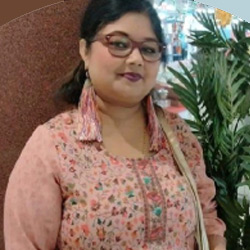
Anchal Sinha
AuthorAnchal Sinha is a highly motivated lady with an MBA in Finance and Marketing and has worked for three years in this field. After becoming a mother and carrying out the responsibilities of motherhood, she left her career. Thereafter, she planned to be a gratified writer and acquired three years of content writing experience till now. She also worked as a teacher in a school and a retail trainer at ICA Edu Skills Pvt Ltd. Taking forward this experience, she started working as a phonics educator at Bambinos Live. She put in all the efforts to engage kids in her classes. Seeing kids enjoying her class and participating in activities motivates her to work with full vigour. This made her competent to work in altering environments. She puts her 100% into whatever she makes up her mind to pursue. With these potentials, she desires to flourish in anything and everything.
LinkedIn Profile ↗