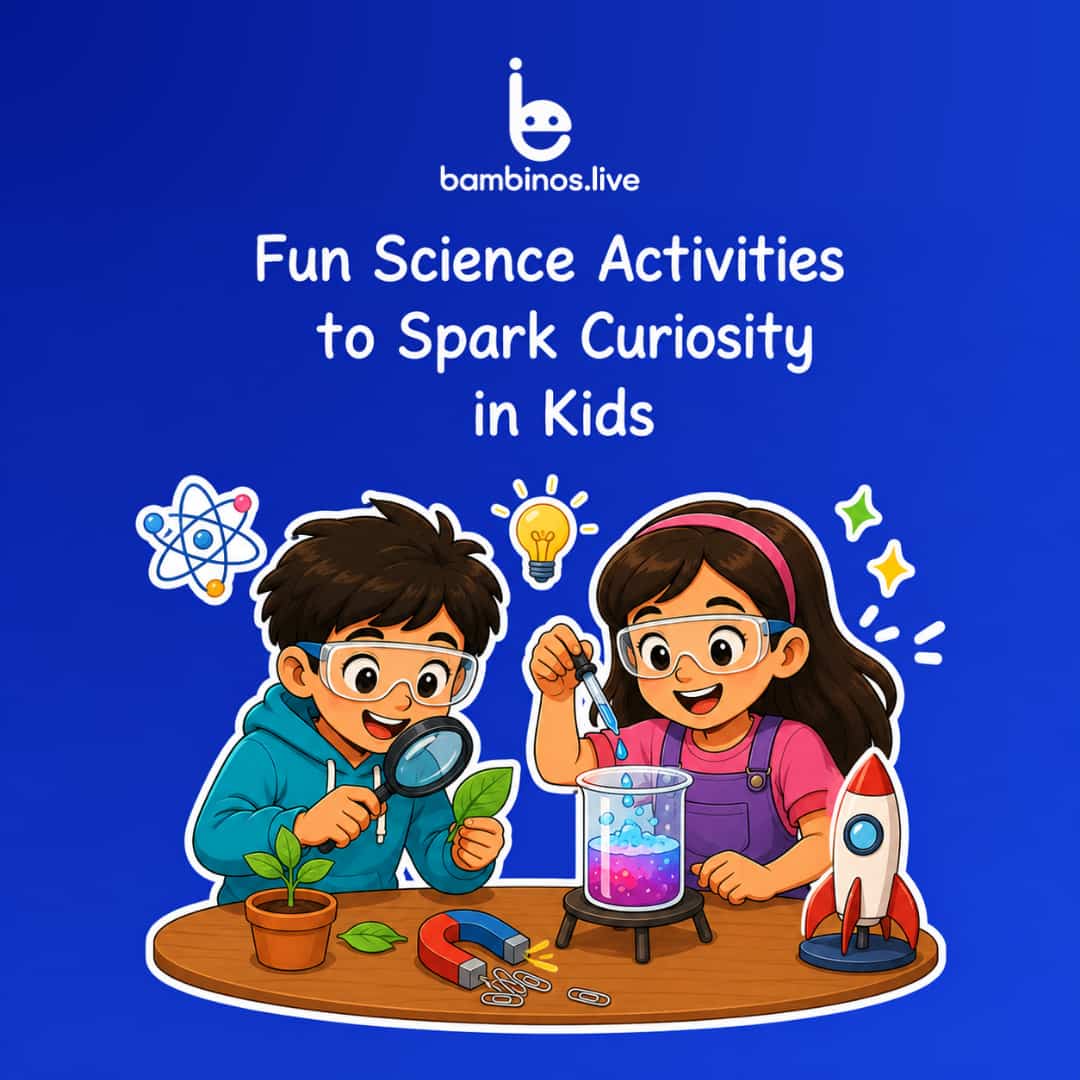
Picture this: your child is standing in the kitchen, watching ice melt in a glass. Suddenly, they ask, “Where does the ice go?” A few minutes later, they are dropping different objects into a bowl of water to see which ones sink and which ones float.
That simple moment is science.
Children are naturally curious about the world around them. They want to know why the sky changes colour, how plants grow, why magnets stick to some objects, and what happens when different things are mixed together. The best way to support this curiosity is not always by giving them the answer immediately. Sometimes, it is by giving them an opportunity to explore.
Fun science activities can turn everyday questions into meaningful learning experiences. Children do not need a laboratory filled with expensive equipment to discover science. Many simple activities can begin with objects already available at home.
The goal is not to create a perfect experiment. It is to encourage children to observe, ask questions, make predictions, and enjoy finding out what happens next.
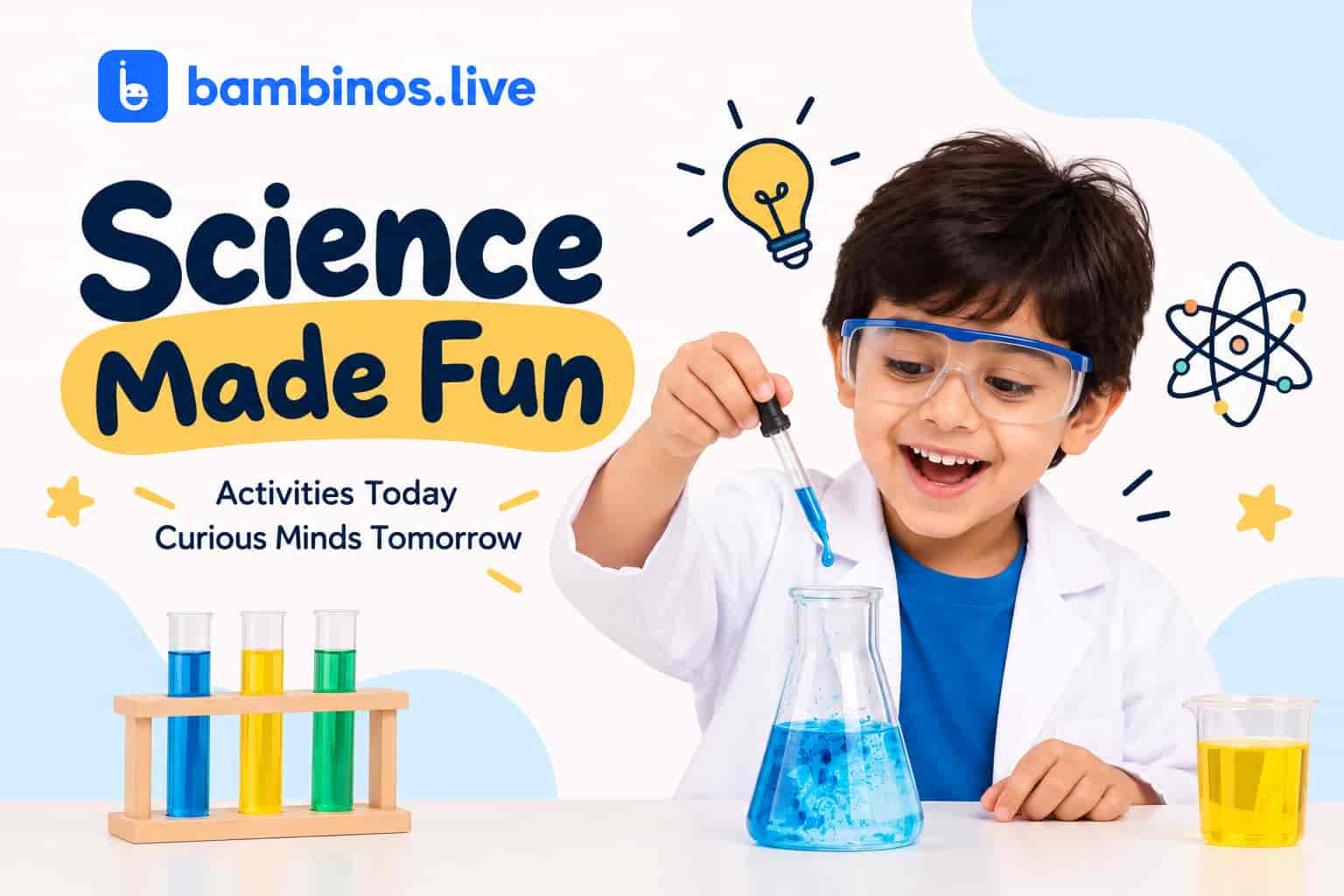
Start With Questions, Not Answers
One of the easiest ways to make science interesting is to let children ask questions.
Instead of saying, “This is how it works,” try asking, “What do you think will happen?”
Imagine placing a few different objects on the table before dropping them into water. Ask your child which ones they think will float and which ones will sink. Let them make their predictions before testing them.
Whether their guess is correct or not, the activity creates an opportunity to talk about what happened.
This type of curiosity-based learning for kids helps children understand that being wrong is not the end of the process. A surprising result can lead to another question, and another question can lead to a new discovery.
Turn Your Kitchen Into a Science Space
Some of the best fun science activities for kids can begin in the kitchen.
Children can observe what happens when ice changes into water. They can mix safe, familiar ingredients under adult supervision and watch for changes. They can compare which materials dissolve in water and which ones remain visible.
These easy science experiments at home help children see that science is not limited to textbooks.
For example, you can ask your child what they think will happen if sugar is added to water and stirred. Will it disappear? Where does it go? The activity becomes more meaningful when children are encouraged to explain what they observe in their own words.
Simple experiments for children do not need to have complicated instructions. A clear question and an opportunity to observe can be enough.
Explore the Science of Nature
Step outside, and children can find countless opportunities for science learning.
A walk in the park can become an activity in observation. Ask your child to look at different leaves and notice their shapes, sizes, and colours. Watch insects from a safe distance and talk about how they move. Observe clouds and discuss how they change.
These science activities for children encourage them to pay closer attention to the world around them.
You can even create a small plant-growing project at home. Let your child observe the plant over several days and notice changes. Encourage them to draw what they see or talk about what they think the plant might need.
Activities like these combine science with patience, observation, and creativity.
Make Predictions Before Every Experiment
A simple way to make kids' science experiments more engaging is to ask children to predict the result first.
Before testing an idea, pause and ask, “What do you think will happen?”
For example, before placing a magnet near different household objects, ask your child which ones they think it will attract. Once they have made their prediction, test each object together and compare the result.
The answer is not the only important part. The thinking that happens before and after the experiment matters too.
Hands-on science activities give children a chance to form their own ideas and then test them. Over time, this can help them become more comfortable with reasoning, problem-solving, and asking thoughtful questions.
To learn more, read our blog: What Kids Learn in Bambinos.live's Unbox Science Classes?
Bring Science Into Everyday Play
Science does not always need to look like a formal experiment.
Building a tower with blocks can introduce ideas about balance and stability. Making paper airplanes can lead to conversations about movement and shape. Playing with shadows can encourage children to think about light.
These STEM activities for kids can be part of ordinary play.
If a block tower keeps falling, resist the urge to fix it immediately. Ask your child why they think it fell and what they could change next time. They may try making the base wider or changing the order of the blocks.
Without realising it, they are observing, testing, and improving an idea.
That is an important part of science learning.
Let Children Get Their Hands Involved
Children often learn more deeply when they are actively involved.
Watching someone else demonstrate an experiment can be interesting, but doing it themselves creates a different experience. They can touch, observe, compare, and discuss what they notice.
Hands-on science learning does not need to be messy or difficult. Even arranging objects from lightest to heaviest, comparing how quickly different items roll down a slope, or observing what happens when an object is placed in sunlight can become interactive science activities.
The key is to give children enough time to explore.
Avoid rushing to explain everything immediately. Let them notice patterns and share their own ideas first.
Encourage Creativity Along With Curiosity
Not every science activity needs one fixed outcome.
Give your child a challenge and let them think of different ways to solve it. For example, ask them to build a bridge using paper and see how much weight it can hold. They can experiment with folding, rolling, or layering the paper before testing their design.
Creative science activities like this combine imagination with problem-solving.
Children may not succeed on their first attempt, and that is perfectly fine. Encourage them to change their design and try again.
This teaches an important lesson: learning often happens through trial, mistakes, and improvement.
Keep Science Fun, Not Stressful
Parents do not need to turn every activity into a lesson.
Sometimes, children simply need the freedom to explore.
If an experiment does not go as expected, treat it as another question to investigate. If your child loses interest, take a break and return to science another day.
The purpose of fun learning activities for kids is to create positive experiences around discovery, not pressure children to find the correct answer every time.
Even short moments of exploration can make a difference. A question asked during a walk, a shadow noticed on the wall, or a simple experiment at the kitchen table can all become part of a child's learning journey.
Small Experiments Can Lead to Big Questions
The most memorable fun science activities are often the ones that encourage children to keep wondering after the activity ends.
Why did that happen?
What would happen if we changed something?
Can we try it another way?
These questions show that children are beginning to think beyond the activity itself.
Science projects for kids do not always need to be large or complicated. A simple idea explored with curiosity can teach children how enjoyable it is to observe, question, and discover.
When children realise that everyday life is full of things they can investigate, science becomes something much bigger than a school subject.
Help Your Child Keep Exploring With Unbox Science
Parents can support science learning at home through simple experiments and everyday questions. But children can also benefit from guided opportunities to explore scientific ideas with the right structure and support.
Bambinos.live's Unbox Science, the best online science classes for kids and teens, offers an interactive science learning experience where children can explore concepts through questions, hands-on activities, experiments, discussions, and real-world connections.
Through engaging science learning activities, children get opportunities to observe, make predictions, test ideas, and explain what they discover. This approach helps make science feel like something to explore rather than simply something to memorise.
With curiosity, encouragement, and meaningful learning experiences, children can continue asking questions long after the experiment is over.
Book a free demo with Bambinos.live, trusted by 50,000+ learners across the world.
Frequently Asked Questions
1. What are some easy science activities children can do at home?
Children can explore simple activities such as observing what floats or sinks, watching ice melt, testing magnets with safe household objects, growing a plant, or comparing how different materials behave in water. Adult supervision should always be used when needed.
2. How do fun science activities help children learn?
Fun science activities encourage children to observe, ask questions, make predictions, test ideas, and discuss what they discover. These experiences can make scientific concepts feel more connected to everyday life.
3. Do science activities need expensive equipment?
No. Many educational activities for children can use simple household objects. The most important part is giving children an opportunity to explore safely and think about what they observe.
4. How can parents encourage curiosity-based learning for kids?
Parents can ask open-ended questions, encourage children to make predictions, give them time to explore, and avoid immediately providing every answer. Supporting a child's questions can help keep their natural curiosity active.
About the Author

Rita Gupta
AuthorRita is an experienced educator specializing in Gita, and English, known for her engaging teaching style and supportive classroom environment. Along with her passion for teaching, she actively writes articles and stories that reflect her creativity and love for learning. Rita focuses on understanding every student’s individual needs, helping them gain confidence, stay motivated, and build a strong academic foundation. Through her guidance, learners develop essential skills and unlock their highest potential. For her, every student is a unique story waiting to be written, and she feels grateful to play even a small part in helping them discover their brightest chapter.