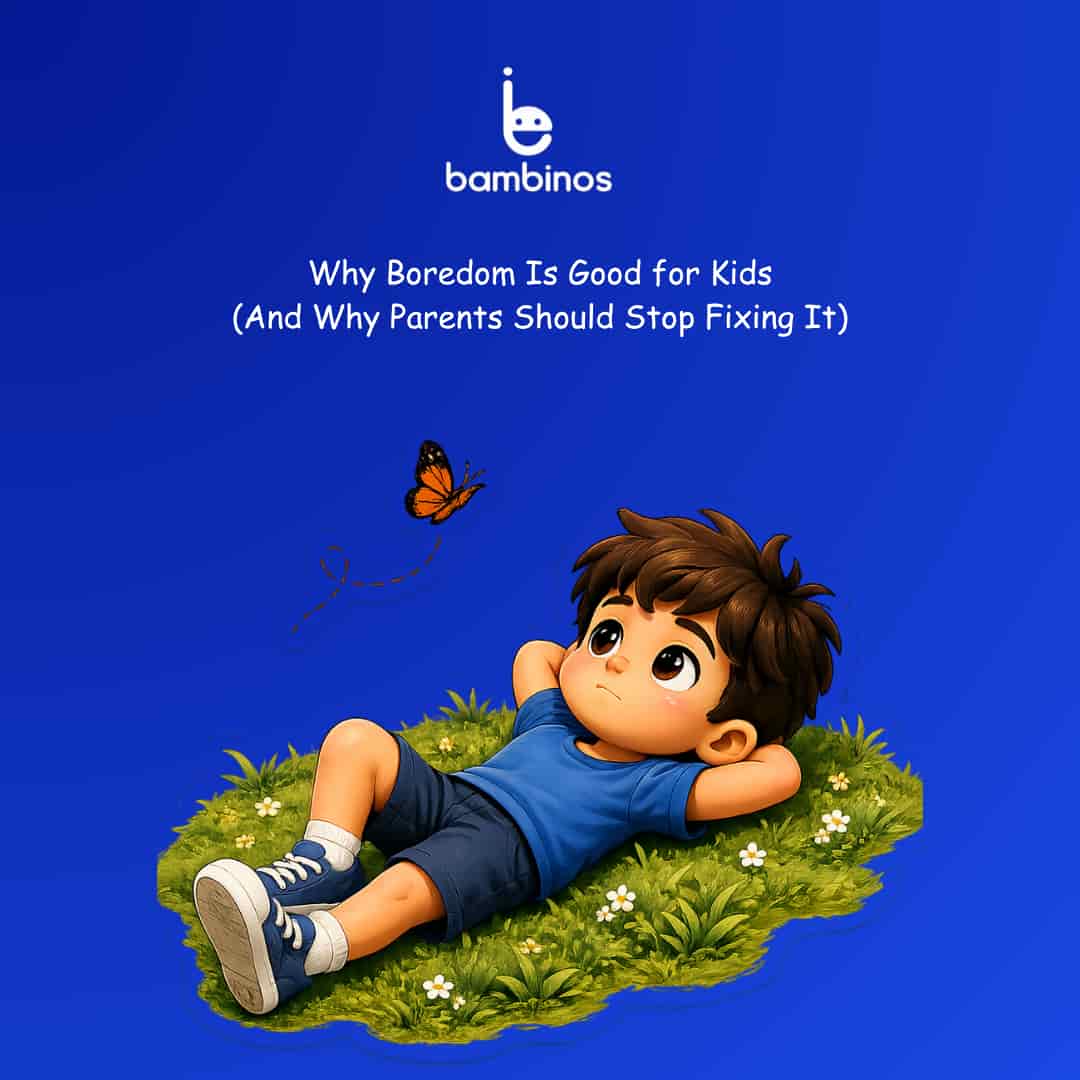
Today's Gen Z and Gen Alpha lead highly structured lives. From school to coding classes, camps, music lessons, and extracurricular activities, almost every hour of their day is carefully planned, leaving very little time for independent play. Modern day parents try their best to keep their child busy with different classes or activities so that the child doesn’t feel ‘bored’. But is boredom really something to avoid or an essential part of growing up?
Just think of the time that happens inside a typical living house during the holidays. The initial excitement of the holidays wears off, the toys lose their appeal and the inevitable complaint echoes through the house’Im bored’.In that moment, it is incredibly tempting to hand a tablet or turn on the television to keep the peace.It keeps their mind temporary occupied but places their brains into purely passive trance. They are purely consuming someone else’s creativity.
When we step back and resist the urge to entertain them something magical happens, that initial whiny restlessness transitions into a quiet focus. The child stops looking outward for instructions and starts looking inward.Allowing your child to get used to some quiet unstructured moments helps them to observe and explore the world around them. Why give them a screen in a car or a café when there is so much action and communication happening around? allows inquisitiveness to thrive. It may take some time to adapt but when the child is not constantly stimulated then they will start to seek something to entertain them. A paper napkin in a café may then easily turn into a fan or a ball,or a straw may become a wand.
Psychologists point out that unstructured time is essential for developing creativity, resilience, emotional balance and problem solving skills. Research shows that boredom activates the brain’s default mode network (DMN), the same system responsible for imagination , daydreaming and reflection( Smallwood and Schooler,2015).
How to handle boredom proactively?
When a child says, “I’m bored,” it could mean different things. They might be hungry, seeking attention, or simply looking for something to do. Instead of immediately stepping in, parents can encourage everyday habits that make children more independent, such as giving them time to choose an activity, explore their interests, and manage their own free time.
1. Understanding the reasons behind boredom
Pay attention to why your child might be saying they are bored. Sometimes, boredom may be a sign that they need food, attention, rest, or a change in activity.
2. Avoiding immediate attention
You do not need to drop everything whenever your child says, “I’m bored.” Giving them some space can help them learn that they do not always need someone else to keep them entertained.
3. Encouraging independent play
Encourage your child to spend some time playing or exploring activities independently. This can help them develop creativity, confidence, and problem-solving skills.
4. Creating a list of activities
Create a simple list of activities your child can do when they feel bored. This could include drawing, reading, building with blocks, puzzles, crafts, or other activities they enjoy.
5. Encouraging children to share ideas
Ask your child to suggest activities they would like to try. Involving them in creating their own list of ideas can make them more interested in choosing activities and taking responsibility for their free time.
Benefits of boredom
1. Regulates emotions and builds patience: When children experience boredom, they learn to sit with their feelings, think creatively, and find ways to entertain themselves. Over time, this helps them manage their emotions, become more patient, and build resilience. For example waiting for the sibling to finish playing with the toy or finish building the block tower even if it keeps falling. These moments teach them that not everything happens instantly. These are lifelong skills that will benefit them far beyond childhood.
2. It sparks creativity: When left all by themselves they invent their own games igniting their creativity , imagination and problem solving.A cardboard box would soon turn into a farm or a parking bay for cars. Such games where there are no rules, no losers or winners or goals develop flexible thinking and confidence also.
3. Building problem solving skills: When there are no structured activities the child has to device his own road map, explore possibilities. They begin asking questions like, "What can I do now?" or "How can I make this fun?" These simple moments become valuable opportunities for learning life long skills of time management and problem solving .
4. Boredom boosts self esteem: When children learn to handle boredom they become more confident in their ability to deal with challenges. They begin to trust themselves and abilities to cope with different situations.As parents, we always tend to overprotect our children from negative feelings. However, emotions like boredom are a normal part of growing up.
Boredom is not an emotional void to be filled. It is a vital developmental phase.Next time your child feels bored, don’t feel guilty.Don’t rush to fix it with an activity or a video game. Validate their temporary frustration , smile and trust them enough to let them navigate the quiet.Let them explore ways to beat this boredom. Its not just okay to feel bored, its good for their mental health.
Why do parents often handle boredom the wrong way?
When children say they are bored, parents may feel the need to immediately find something for them to do. Giving them a phone, turning on the television, or planning another activity may stop the complaint temporarily, but it can prevent children from learning how to handle boredom independently.
1. Relying on screens for entertainment: Giving a mobile phone or tablet whenever a child feels bored can encourage dependence on screens for constant stimulation.
2. Filling every free moment: Scheduling classes, activities, and entertainment throughout the day can leave little room for children to explore their own interests.
3. Solving boredom too quickly: Immediately suggesting what a child should do does not give them enough time to think of their own ideas.
4. Treating boredom as a problem: Boredom is a normal feeling and does not always require an immediate solution. Children can develop valuable skills by learning to experience and manage it.
5. Expecting constant engagement: Children do not need to be entertained every moment. Allowing quiet and unstructured time gives them opportunities to explore, imagine, and create.
How does Bambinos.live take a different approach?
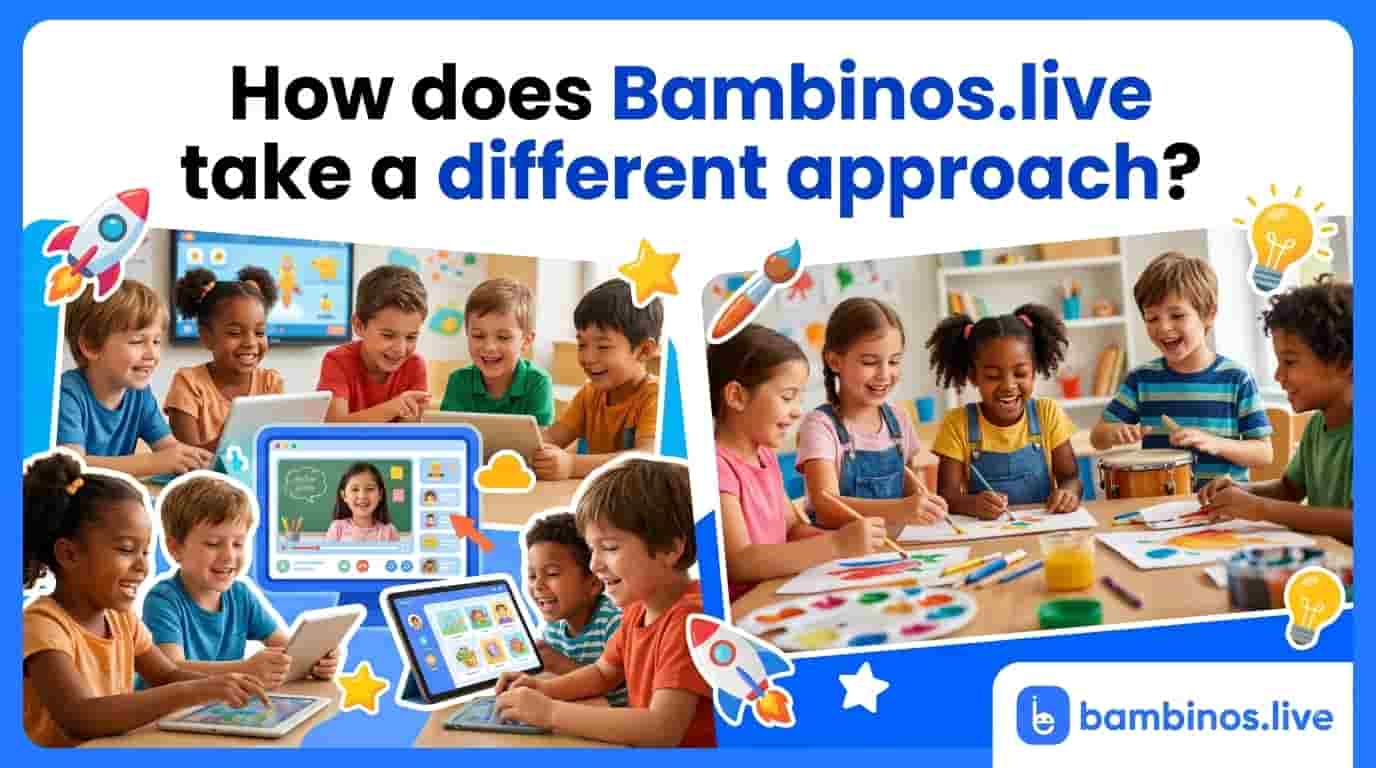
Bambinos.live is a learning experience company that combines interactive online classes, doodle-based activities, and engaging learning experiences to help children learn through exploration and participation. Its online classes for kids focus on active involvement rather than simply keeping children occupied with screen time.
Encouraging curiosity through interactive classes
Bambinos.live offers interactive online classes for kids where children can participate, ask questions, and engage with teachers. This creates an active learning environment that encourages curiosity and exploration.
Developing creativity through doodles
Doodle-based activities give children opportunities to express their ideas visually and use their imagination. Simple drawing and doodling can make learning more engaging while encouraging creative thinking.
Building skills through learning experiences
Bambinos.live creates learning experiences that encourage children to explore concepts, participate in activities, and apply what they learn. This helps children develop skills through active participation.
Supporting independent thinking
Children are encouraged to think, respond, and share their own ideas during learning activities. This gives them opportunities to develop confidence and become more independent learners.
Strengthening problem-solving skills
Interactive activities and classroom discussions encourage children to think through questions and find solutions. These experiences help develop problem-solving skills that can be useful both inside and outside the classroom.
Give children space to discover
By now, it should be clear that boredom is not something parents need to eliminate at every opportunity. Quiet, unstructured moments can give children the freedom to think, imagine, explore, and discover their own interests. Instead of immediately reaching for a screen or planning another activity, parents can give them the space to find their own way.
Boredom can become an opportunity for creativity, patience, emotional growth, and independent thinking. What may initially look like restlessness can gradually turn into curiosity and self-directed play.
At Bambinos.live, we believe children learn best when they are actively involved, curious, and encouraged to express their ideas. Our interactive learning experiences are designed to make participation meaningful while helping young learners build confidence and essential skills.
Want to see how Bambinos.live can make learning more interactive for your child? Book a demo and explore our engaging learning experiences.
FAQs
1. Why is boredom good for kids?
Boredom can give kids time to think, explore, imagine, and create without constant entertainment. Instead of relying on adults or screens, they can discover ways to occupy themselves. These quiet moments can support creativity, patience, confidence, and decision-making while giving them the freedom to follow their interests at their own pace.
2. Can boredom help children become more creative?
Yes, boredom can encourage children to use their imagination in unexpected ways. They may invent games, create stories, draw pictures, or turn everyday objects into something new. Without ready-made entertainment, they have more opportunities to experiment and express ideas, which can encourage flexible thinking and originality.
3. Can parents stop giving children screens whenever they are bored?
Yes, parents can avoid making screens the first response to boredom. Instead, they can give their child some quiet time to decide what they would like to do. This can help them become comfortable without constant stimulation and discover enjoyable ways to spend their free time.
4. Can boredom help children develop problem-solving skills?
Yes, boredom can encourage children to find their own solutions when there is no activity planned for them. They may wonder what they can build, play, or explore next. Making these choices can strengthen decision-making, flexible thinking, and the ability to approach everyday situations with greater confidence.
5. Why do parents often try to fix boredom quickly?
Parents may respond quickly because they want to prevent complaints or keep their child occupied. Offering a phone, television, or planned activity can provide an immediate distraction. However, leaving some free time can give young minds an opportunity to explore their interests and learn that boredom does not always need an instant solution.
6. How can Bambinos.live support children's creativity and independent thinking?
Bambinos.live can encourage active participation through interactive classes, doodle-based activities, discussions, and engaging learning experiences. Students can ask questions, share ideas, and explore concepts instead of simply watching content. Such experiences can nurture curiosity, confidence, creative expression, and a willingness to think through questions independently.
7. Is boredom good for children's emotional development?
Yes, experiencing boredom can help children become more comfortable with temporary frustration. They can learn that not every uncomfortable feeling needs to be removed immediately. Over time, this can support patience, emotional resilience, and self-confidence, helping them handle quiet moments and everyday challenges with greater ease.
About the Author

Bambinos Learning Solutions
AuthorBambinos is India’s #1 online learning platform for kids built by a team of IIM & IIT graduates.
LinkedIn Profile ↗