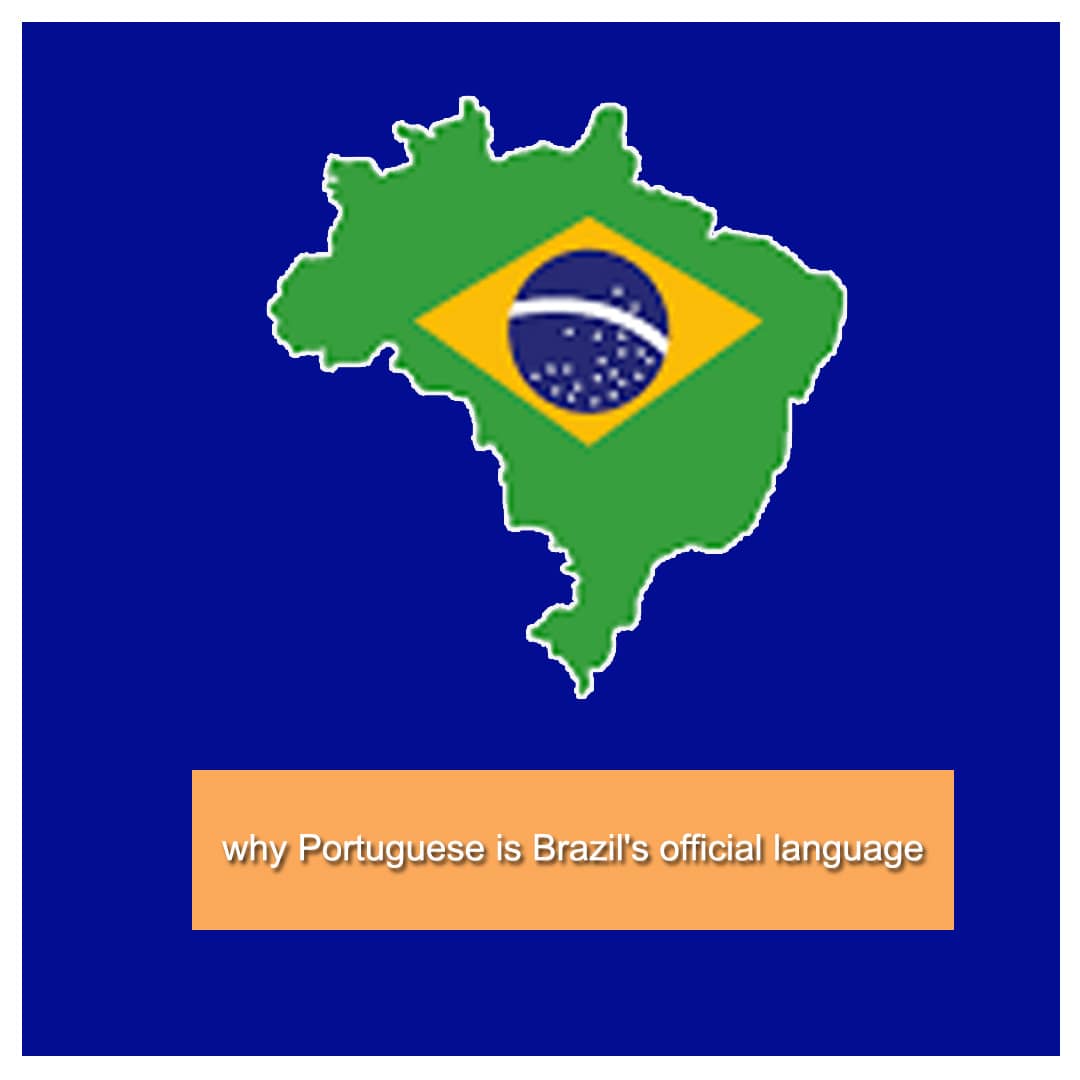
Imagine a geography teacher showing a map of South America to the class.
The teacher asks, “What language do people speak in Argentina?”
A student answers, “Spanish.”
The teacher points to Brazil and asks, “What about this country?”
Another student replies, “Spanish, because it's also in South America.”
“Not quite,” the teacher explains. “Brazil's official language is Portuguese. But why would a country in South America speak the language of Portugal, which is thousands of kilometers away?”
The answer lies in events that took place more than 500 years ago.
Brazil speaks Portuguese because it was colonized by Portugal, while Spain colonized much of the surrounding region. Portuguese gradually became widespread through settlement, government administration and education. Even after Brazil gained independence in 1822, the language remained in use.
Why Does Brazil Speak Portuguese Instead of Spanish?
During the late 1400s, Portugal and Spain were competing to establish overseas trade routes and claim territories.
In 1494, the two kingdoms signed an agreement called the Treaty of Tordesillas. It established an imaginary dividing line that separated their overseas territorial claims.
Part of present-day eastern Brazil fell on Portugal's side of the line. This influenced the country's later colonial history.
However, the treaty was an agreement between European powers. Indigenous peoples already living in these regions were not consulted and had no part in making it.
Spain went on to colonize large parts of South America, which contributed to Spanish becoming widely spoken across the continent. Portugal established control over Brazil, where Portuguese became dominant over time.
The treaty helps explain the difference, but it was not the only reason the language spread.
How Did Portuguese Become Widely Spoken in Brazil?
Portuguese developed its position gradually through colonial settlement, government policies and social changes.
Portuguese Explorers Arrived in 1500
On April 22, 1500, a Portuguese fleet commanded by Pedro Álvares Cabral reached the coast of present-day Brazil.
The expedition was travelling toward India, an important destination for European trade.
Cabral's arrival marked the beginning of sustained Portuguese involvement in the territory.
But the land was not empty when the ships arrived.
Indigenous communities had lived there for thousands of years. They spoke different languages, maintained their own traditions and had established societies long before European colonization.
Over the following centuries, Portuguese settlers and colonial officials established towns, trading activities and administrative institutions.
As their influence expanded, Portuguese became increasingly common in public life.
Colonial Language Policies
During the colonial period, people in Brazil continued to speak several languages.
Indigenous communities maintained their own linguistic traditions. In some regions, shared languages known as língua geral were also used for communication between different groups.
In the eighteenth century, Portuguese authorities introduced policies intended to increase the use of Portuguese and restrict Indigenous languages.
One important set of regulations, known as the Diretório dos Índios, was introduced in 1757 and extended to a wider area in 1758.
These policies promoted Portuguese in schools and colonial institutions.
Language change was gradual, and many communities continued speaking their own languages despite restrictions.
Independence Did Not Change the Main Language
Brazil declared independence from Portugal on September 7, 1822.
By this time, Portuguese was already established in government administration and many areas of everyday life.
Independence brought political change, but it did not replace the language used throughout much of the country.
In 1988, Brazil adopted its current Constitution. Article 13 identifies Portuguese as the official language of Brazil.
Key Events in Brazil's Language History
| Year | What Happened |
|---|---|
| 1494 | Portugal and Spain signed the Treaty of Tordesillas. |
| 1500 | Pedro Álvares Cabral's expedition reached Brazil. |
| 1757-1758 | Portuguese colonial authorities introduced and expanded policies promoting their language. |
| 1822 | Brazil declared independence from Portugal. |
| 1988 | Brazil's Constitution formally identified Portuguese as its official language. |
These events show how a language introduced during colonization became firmly established over several centuries.
Why Do Brazil's Neighbors Speak Different Languages?
Looking at a map of South America reveals an interesting pattern.
Several countries surrounding Brazil primarily speak Spanish, while others have different official languages.
This reflects the continent's varied colonial history, although Indigenous languages were spoken long before European arrival and remain important today.
| Country or Territory | Main or Official Language |
|---|---|
| Brazil | Portuguese |
| Argentina | Spanish |
| Colombia | Spanish |
| Uruguay | Spanish |
| Guyana | English |
| Suriname | Dutch |
| French Guiana | French |
For example, Argentina and Colombia were colonized by Spain, while Guyana came under British colonial rule. Suriname was a Dutch colony, and French Guiana remains part of France.
Another interesting geographical fact is that Brazil shares land borders with every other independent South American country except Chile and Ecuador.
Despite being connected geographically, these countries have different language histories.
Are Other Languages Spoken in Brazil?
Yes. Portuguese is the official language, but Brazil is home to many other languages.
Before the Portuguese arrived, Indigenous peoples across the territory spoke numerous languages belonging to different linguistic families.
Many have survived and are still spoken in communities today.
According to Brazil's 2022 Census, 295 Indigenous languages were recorded among Indigenous people aged two or older.
Some examples include Tikúna, Guarani Kaiowá, Guajajara and Kaingang.
Brazil also recognizes Libras, the Brazilian Sign Language, as a legal means of communication and expression.
An official language is therefore not the same as the only language spoken within a country.
Brazil's linguistic diversity reflects its Indigenous heritage, migration and complex history.
What Are Some Common Portuguese Words?
Portuguese is spoken in Brazil as well as Portugal and several other countries. Learning a few everyday expressions offers an introduction to the language.
| Portuguese Word | English Meaning |
|---|---|
| Oi | Hi |
| Bom dia | Good morning |
| Boa tarde | Good afternoon |
| Boa noite | Good evening or good night |
| Por favor | Please |
| Obrigado / Obrigada | Thank you |
| Tchau | Goodbye |
The forms obrigado and obrigada generally depend on the gender of the person expressing thanks.
Brazilian Portuguese and European Portuguese are varieties of the same language. They differ in pronunciation, certain words and some aspects of grammar.
These differences developed as the language changed over time in different places.
How Can This Topic Be Explained in a Classroom?
A map is a simple starting point for explaining Brazil's language history.
The teacher can point to Brazil, Argentina and Colombia and ask students to identify the languages commonly spoken in each country.
Once they notice the difference, the historical explanation can begin with the Treaty of Tordesillas and the arrival of Portuguese expeditions.
A short classroom exercise can include:
-
Locate the countries: Find Brazil, Portugal and Spain on a world map. Notice the Atlantic Ocean separating Europe from South America.
-
Arrange the historical events: Place 1494, 1500, 1822 and 1988 in chronological order and explain their significance.
-
Compare neighboring countries: Identify those where Spanish, Portuguese, English, Dutch or French is commonly spoken.
-
Discuss language diversity: Consider why a country can have an official language while many communities speak others.
The teacher can finish with a brief discussion.
Teacher: “Why does Brazil mainly speak Portuguese?”
A student answers: “Because Brazil was colonized by Portugal.”
Another student adds: “And Portuguese continued to be used after Brazil became independent.”
This connects the historical explanation to the geographical question that began the lesson.
The subject also fits naturally into general knowledge lessons that explore countries, languages, important dates and world history. More related topics can be found in these GK questions for Class 8.
Brazil's official language reflects centuries of historical change. The Treaty of Tordesillas influenced European territorial claims, Portuguese expeditions arrived in 1500, and colonial institutions and language policies contributed to the spread of Portuguese.
When Brazil became independent in 1822, the language was already widely established and remained in use.
Yet Portuguese is only one part of the country's linguistic history. Indigenous communities had spoken their own languages long before European arrival, and many of those languages remain part of Brazil today.
The different languages spoken across South America reveal how geography, migration, colonization and cultural history have shaped the region.
About the Author

Srijita Banerjee
AuthorSrijita Banerjee is a freelance writer and an enthusiastic educator who loves connecting with children and helps them out to Groom Well. Srijita imbibes profound love for English and is a torch bearer. Strong believer and highly optimistic. Hardwork and dedication drives Srijita to work relentlessly towards best.
LinkedIn Profile ↗