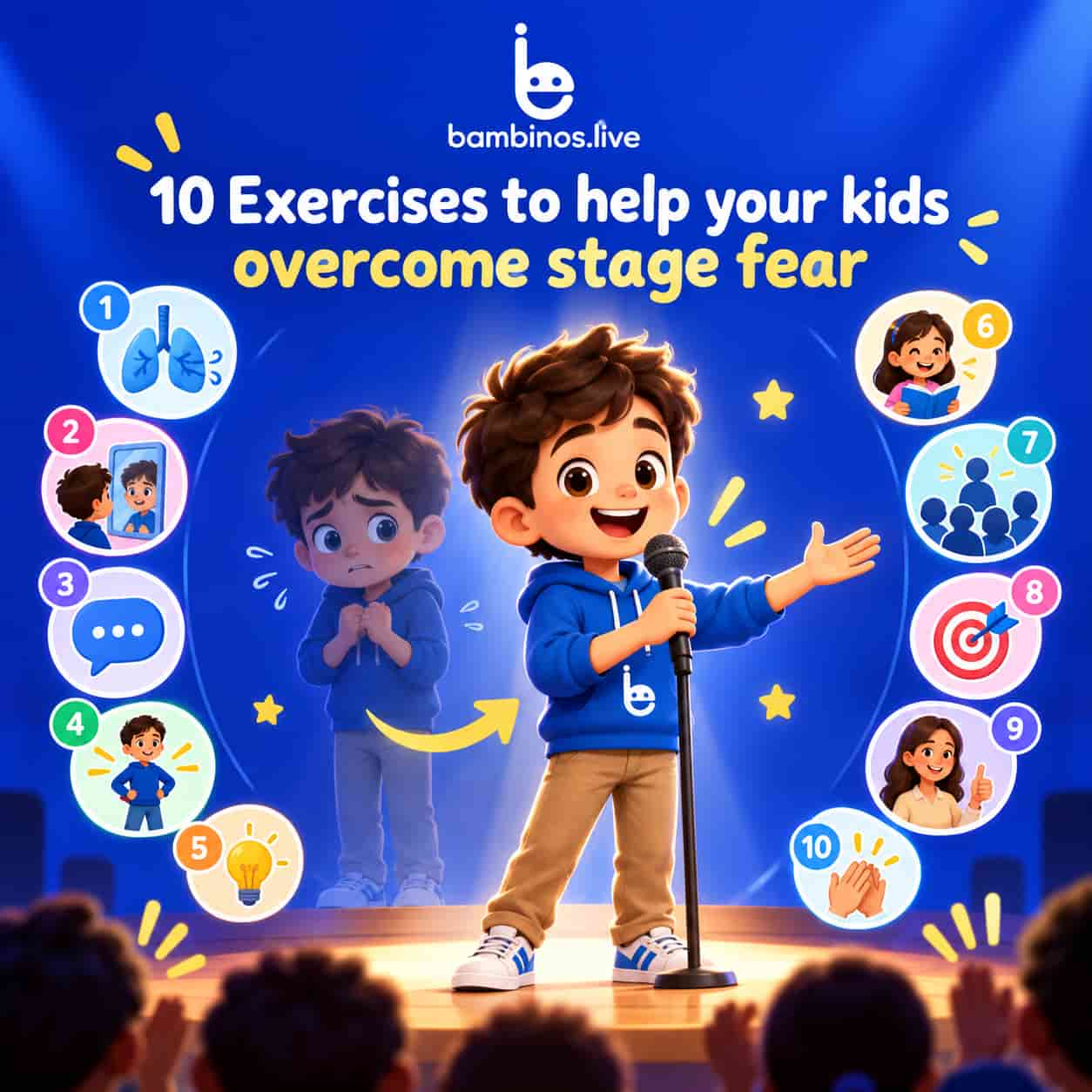
To overcome stage fear, kids can practice speaking regularly and start with simple situations before speaking in front of a larger audience. Mirror speaking, storytelling, toy presentations, product pitches, pick-and-speak games, writing-to-speaking activities, role-play, and breathing exercises can help kids speak with less nervousness.
Every kid has their own talents, ideas, and abilities, but stage fear can sometimes stop them from sharing what they know. They may know the answer, have a creative idea, or have something interesting to say but hesitate when asked to speak in front of others. Regular speaking practice can help them share their thoughts more clearly.
In this blog, you will explore 10 simple exercises that can help your kids practice speaking, share their ideas, and overcome stage fear.
Why do kids experience stage fear?
Kids experience stage fear when they feel nervous, worried, or unsure about speaking in front of other people. Fear of making mistakes, fear of being judged, lack of speaking practice, unfamiliar situations, and pressure to perform can make kids feel nervous about speaking in front of an audience.
According to the World Health Organization (WHO), anxiety disorders affect 4.4% of children aged 10-14, and are among the leading causes of illness and disability in this age group. Most kids with stage fear, though, are not anxious in general. They are simply unpractised at being watched.
Some common reasons include:
- Fear of making mistakes: Causes hesitation when speaking or answering questions.
- Fear of judgment: Creates worry about how others may react.
- Lack of practice: Makes speaking in front of others feel unfamiliar.
- Unfamiliar situations: Makes stage performances or large audiences feel uncomfortable.
- Pressure to perform: Creates nervousness when kids feel they must speak perfectly.
- Low confidence: Makes it harder to share ideas or speak openly.
10 exercises to help your kids overcome stage fear
Stage fear can make kids hesitate, lose their train of thought, or feel nervous when speaking in front of others. These simple exercises give kids regular practice with speaking, storytelling, presenting, and everyday conversations.
1. Mirror speaking practice
Ask kids to speak in front of a mirror for one or two minutes about a familiar topic such as their favourite game, book, or school activity. Ask them to notice their posture, facial expressions, eye contact, and speaking pace.
Example: “My favourite sport is cricket. I like playing with my friends because it is fun and keeps me active.”
Why it helps: Kids can practice their voice, expressions, and body language before speaking in front of others.
2. Toy audience presentation
Arrange stuffed animals, dolls, or toys as an audience. Ask kids to give a short presentation about their favourite toy, animal, book, hobby, or school.
Example: Ask them to explain what their favourite toy is, when they got it, and why they like it.
Why it helps: A toy audience gives kids a simple way to practice presenting before speaking in front of people.
3. Family storytelling
Give kids regular opportunities to tell stories during family time. Ask open-ended questions such as:
- “What was the most interesting thing you learned today?”
- “Tell me about something funny that happened today.”
- “What would you do if you could spend one day anywhere?”
Why it helps: Family conversations give kids more chances to organise their thoughts and speak in complete sentences.
4. Product pitch challenge
Give kids an everyday product such as a school bag, water bottle, toy, or notebook and ask:
“You have one minute to convince me to buy this product.”
Ask them to explain its features, price, usefulness, and who would use it.
Why it helps: Kids practice explaining ideas and answering questions without reading from a script.
5. Pick-and-speak game
Write simple topics on small pieces of paper and put them in a bowl. Let kids pick one and speak for 30 seconds.
Topics can include:
- My favourite animal
- My dream holiday
- My favourite food
- My favourite game
- A person I admire
Increase the time to one or two minutes as they become comfortable.
Why it helps: Kids practice organising their ideas and speaking without memorising an answer.
6. Writing-to-speaking practice
Ask kids to write or draw something on a blank sheet. They can make a list, draw a picture, or write a few sentences.
Example: If they draw a space station, ask, “Tell me what is happening in your picture.”
Then ask them to turn their idea into a one-minute speech.
Why it helps: Writing and drawing can give kids a clear starting point for organising and sharing their thoughts.
7. Pretend news reporter
Give kids a toy microphone or household object and ask them to become a news reporter.
Example: “Good evening. This is Ananya reporting from Green Valley School. The school held its annual sports day today. Students took part in running, long jump, and relay races.”
Ask them to include what happened, where it happened, who was involved, and what happened next.
Why it helps: Kids practice speaking clearly, organising information, and presenting without reading every word from a script.
8. Puppet storytelling
Give kids puppets, dolls, or handmade characters and ask them to create a short story.
Example: Two friends find a lost puppy. One character asks questions, another explains what happened, and the kids decide the ending.
Why it helps: Puppets can make kids feel less self-conscious while they practice storytelling, expressions, and different voices.
9. Real-life speaking challenge
Give kids simple opportunities to speak in everyday situations.
- Order their own food at a restaurant
- Ask a shop assistant a question
- Introduce themselves to someone new
- Make a simple request
Example: “I would like a vegetable sandwich and a glass of water, please.”
Why it helps: Kids practice speaking in real situations instead of only practicing at home.
10. Deep breathing and positive self-talk
Before a speaking activity, practice a few slow breaths together. Encourage kids to say:
- “I can take my time.”
- “It is okay to feel nervous.”
- “I can speak one sentence at a time.”
- “I don't have to be perfect.”
Why it helps: Slow breathing can help kids manage nervousness, while simple self-talk reminds them that they can take their time.
Get rid of stage fear for your kids with Bambinos.live
With Bambinos.live, the best confidence building classes for kids, your kids can get regular opportunities to practice speaking through live English classes, picture talk, storytelling, presentations, and other speaking activities. With 50,000+ learners all over the world, Bambinos.live gives kids opportunities to speak, share their ideas, and participate during live classes.
Bambinos.live has a 4.7-star rating from 8,000+ Google reviews and a 4.7-star rating from 1,900+ Trustpilot reviews. The platform has also been featured on Shark Tank India.
See what a parent says
We are very happy with Shraddha Ma’am’s mentorship in English speaking for our child. We can clearly see the improvement—earlier, my child used to hesitate and speak only a few words. But now, under her guidance, my child is able to form continuous sentences with much more confidence.
Shraddha Ma’am’s way of teaching, especially through picture talk activities, has made learning engaging and easy to understand. Compared to previous classes, the difference is very noticeable—my child now speaks more fluently and expresses thoughts without much pause.
We truly appreciate her patience, encouragement, and the progress she is bringing in our child’s communication skills.
- Lakshmi Parvathi Boggavarapu, India
Source: Trust pilot
If your kids hesitate to speak in front of others, regular speaking opportunities can give them more chances to practice expressing their ideas. Book a free demo with Bambinos.live and let your kids experience a live class.

Ready to help your kids overcome stage fear?
By now, you have learned that regular speaking practice, simple activities, and real-life speaking opportunities can help your kids become more comfortable speaking in front of others. With the right practice, they can learn to express their ideas without letting stage fear hold them back.
With Bambinos.live, your kids can practice speaking through live English classes, storytelling, picture talk, presentations, and other speaking activities. Join 50,000+ learners worldwide and give your kids more opportunities to practice speaking, build confidence, and get rid of stage fear.
Book a free demo with Bambinos.live and help your kids take their next step towards becoming confident speakers.
FAQs
1. What causes stage fear in kids?
Fear of making mistakes can cause kids to hesitate when they speak. Fear of judgment can create worry about how others may react. A lack of speaking practice can make speaking in front of others feel unfamiliar. Unfamiliar situations can make stage performances feel uncomfortable. Pressure to perform can create nervousness when kids feel that they must speak perfectly.
2. How can kids overcome stage fear?
Kids can overcome stage fear by practicing speaking regularly. Kids can practice mirror speaking, storytelling, toy presentations, pick-and-speak games, and real-life conversations. These activities can give kids more opportunities to speak in front of others.
3. How can parents help kids with stage fear?
Parents can help kids overcome stage fear by giving them regular opportunities to speak. Parents can have regular conversations with kids and can ask open-ended questions. Open-ended questions can encourage kids to express their ideas. Simple speaking activities can give kids more opportunities to practice before they speak in front of an audience.
4. What should kids do before speaking on stage?
Kids should practice their speech before they speak on stage. Kids should take slow breaths to manage nervousness. Kids should remember their main points instead of trying to memorize every word. Kids should remind themselves that they can take their time and do not need to speak perfectly.
5. How can Bambinos.live help kids overcome stage fear?
Bambinos.live provides live online classes with teacher mentorship. Kids can participate in speaking activities during live classes. These activities can give kids regular opportunities to practice communication skills. Kids can practice storytelling, picture talk, and presentations during live classes. Bambinos.live also provides online courses for kids in a safe online learning environment.
About the Author

Bambinos Learning Solutions
AuthorBambinos is India’s #1 online learning platform for kids built by a team of IIM & IIT graduates.
LinkedIn Profile ↗