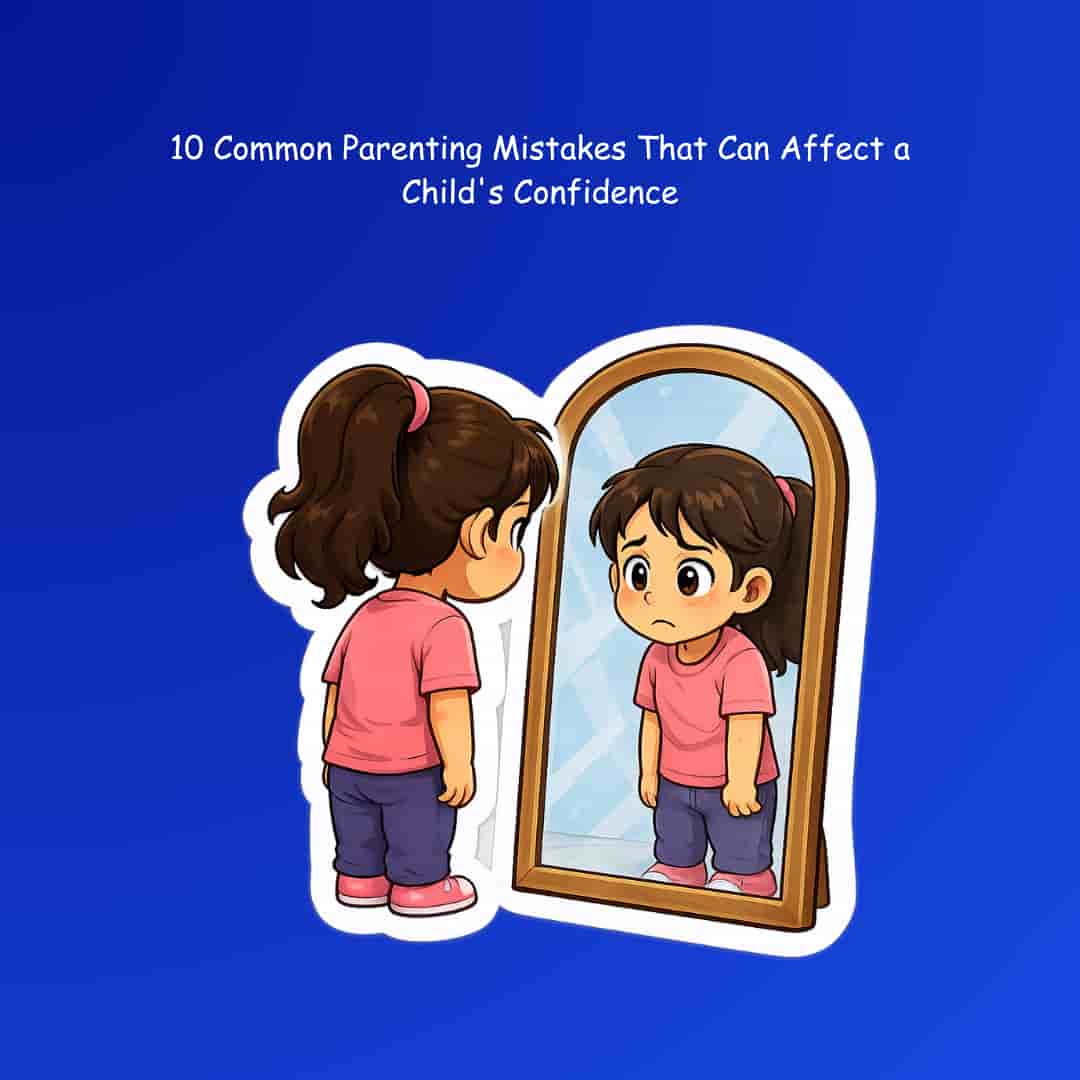
The most common parenting mistakes that can affect kids’ self-confidence are comparing them with others, overprotecting them, criticizing their mistakes, expecting perfection, ignoring their feelings, using negative labels, solving every problem for them, focusing only on achievements, disregarding their emotions, and setting unrealistic expectations. These parenting habits can make children doubt their abilities, fear failure, and develop low self-esteem.
Raising confident kids is one of the most precious gifts parents can give their offspring. Confidence allows kids to communicate effectively, establish positive relations, cope with various problems independently, and deal with difficulties boldly. Nevertheless, the best intentions and efforts of many loving parents might be wasted due to some parenting pitfalls that harm self-esteem of their kids.
As per the science of child psychology, confidence is not an innate quality of children, it needs to be nurtured throughout time through experience, encouragement, and surrounding of the child. Small parenting actions, done routinely, will leave a significant effect on psychological state of the kid.
Here is the list of the top 10 parenting pitfalls that may affect your kid's confidence level.
1. Always Comparing Your Child with Others
Among the worst parenting practices is the comparison in parenting.
Phrases such as:
- "See how much your cousin studies."
- "Why can't you be as athletic as your friend?"
- "Why can't you do like your sister?"
can sometimes appear motivating; however, most of the time, they just tell the child that he/she is "not good enough."
Why it negatively impacts self-confidence
It makes children start valuing themselves according to what other people have achieved instead of appreciating their own abilities. For example, in online classes for kids, comparing a child’s performance, participation, or learning pace with other children can make them feel inadequate. It can lead to jealousy, anxiety, and poor self-respect instead of encouraging a positive attitude toward learning.
Tip for Positive Parenting
Always compare your child with his/her previous performance.
Rather than saying:
"Your friend got 95."
Say:
"You have scored 10 marks more than last time. I am very proud of you."
2. Overprotection of your child
Parents love protecting their kids, but overprotective behavior might unintentionally convey the message, "I don't believe that you will be able to do it yourself."
Confidence is built through experience, mistakes, and independent learning. If parents take care of everything for their kids, children may have fewer opportunities to develop confidence in their own abilities. For example, in public speaking classes for kids, allowing children to prepare their own ideas, speak in front of others, and learn from mistakes can help them become more confident and independent.
Give children age-appropriate opportunities to do things on their own. Encourage them to express their ideas, make simple decisions, and participate in activities such as public speaking classes for kids, where they can practice communication skills and build confidence through experience. Give children some independence depending on their age. Let children:
- tie their shoelaces
- pack their backpack
- make choices
- resolve minor conflicts
3. Pointing out Mistakes Instead of Praising
Most parents pay attention to correcting mistakes only.
Such phrases are:
- "You always make a mess."
- "Why are you so careless?"
- "You never listen."
In time, kids start believing what people say about them.
Why it lowers self-confidence
Criticism becomes part of the child’s inner speech.
Instead of saying,
"I have made a mistake,"
the child starts believing that he or she is
"a mistake."
Positive Parenting Solution
Apply the 5:1 principle.
Say five nice words for each correction.
4. Striving for Perfection
There is a lot of pressure on children to perform perfectly academically, athletically, musically, or behaviourally.
Why it affects confidence
Perfectionism leads to the fear of failure.
A child may refuse to do anything new because they are afraid of making a mistake.
Positive Parenting Tip
Encourage the idea that it is okay to make mistakes.
Use affirmations such as:
"Every expert started off as a novice."
5. Ignoring What Your Child Is Saying
A busy schedule can make discussions lopsided.
Parents can interrupt, ignore feelings, or give quick fixes without listening.
How it impacts confidence
Children start thinking that what they say doesn’t count if not listened to.
It impacts their confidence and communication skills.
Positive Parenting Technique
Listen actively.
Make eye contact.
Let your child complete her/his statement.
Validate their feelings by saying:
“I get why you feel that way.”
Being listened to makes children emotionally secure.
6. Using Labels
Kids hear things such as:
- Lazy
- Naughty
- Shy
- Stubborn
- Slow
Though seemingly harmless, these labels impact kids' identities.
How it impacts confidence
Kids tend to become what people tell them.
A kid labeled "shy" will stop trying at making friends.
Tip for Positive Parenting
Focus on actions and not personality.
Instead of saying:
"You're being careless."
You could say:
"You didn't pack your books into your backpack today."
7. Fixing All Problems for Them
From homework, friends, or projects, at times, parents intervene too soon. Reason it impacts self-confidence Problemsolving is an important step in building self-confidence. Children who never fix problems on their own might lack confidence in themselves later in life. Positive Parenting Tip Be more of a guide than a rescuer. Ask:
- “What do you think you can do?”
- “Do you have another solution?”
8. Concentrating only on Accomplishments
Children get recognition only when they win awards and excel academically.
Reason for low self-confidence
Children start feeling they are loved because of their accomplishments.
They develop performance anxiety and fear of failing.
Positive Parenting Tip
Praise your children for their:
- Kindness
- Honesty
- Curiosity
- Team work
- Creativity
- Perseverance
9. Disregarding their Feelings
Adults may say things like:
- “Don’t cry.”
- “It’s nothing.”
- “Stop being dramatic.”
While these responses are meant to soothe, they disregard emotions.
Why it impacts confidence
Children learn to bury their emotions rather than understand them.
Emotional expression is strongly tied to high self-confidence.
Tip for Positive Parenting
Recognize their emotions first.
Saying, “I see you’re upset,” before helping them to process their emotions.
10. Unrealistic Expectations
Every kid is an individual.
Some kids do well academically.
Other kids may excel at sports, art, music, leading, or creating.
Why it impacts self-esteem
Putting too much pressure on each kid to be good at everything causes stress.
The kids begin feeling that they cannot live up to their parents' expectations.
Positive Parenting Advice
Be aware of what your kid excels at.
Work on developing skills based on your kid's natural talents.
Kids will gain self-confidence through acceptance.
How Positive Parenting Creates Strong Self-Confidence
Positive parenting is not about never saying “no.”
Rather, it is about guiding children with respect, encouragement, consistency, and empathy.
Based on the field of child psychology, self-confident children will:
- Develop positive relationships with others
- React to failure positively
- Be open communicators
- Be resilient
- Excel in their studies
- Make good decisions
- Grow into emotionally stable adults
The little things count more than the big things.
Tips for Gaining Confidence Easily Everyday
Below are some simple parenting tips that you may consider today:
- Concentrate on progress, not perfection.
- Give children opportunities to make decisions for themselves.
- Compliment children for their values, not just for their accomplishments.
- Listen without interruption.
- Do not compare with brothers/sisters or friends.
- Instill problem-solving skills in children.
- Mistakes should be celebrated and appreciated.
- Spend some one-on-one time each day.
- Be polite while disciplining children.
- Convey to your child, "I trust you."
Everyone is bound to make mistakes since they are part of the process in parenting. The good thing is that children do not need perfect parents but learning parents who are ready to learn and bond with them.
Through abstaining from practices such as comparison, overprotective parents, too much criticism, and unrealistic expectations, one is able to promote the development of healthy self-respect in children and ensure positive child behavior. Children will be able to build up confidence and ability through positive parenting in exploration, learning, overcoming setbacks, and trusting in themselves.
Note that children will not gain confidence from praising them but through trust, encouragement, acceptance, and giving them chances to do things for themselves.
Want to help your child learn, explore, and grow with confidence? Book a Demo with Bambinos.live today and discover our engaging learning experiences.
Frequently Asked Questions
1. What are the most common parenting mistakes that can affect a child's confidence?
The most common parenting mistakes that can affect a child's confidence are comparison, overprotection, excessive criticism, negative labeling, solving every problem for them, and setting unrealistic expectations. These behaviors can make children doubt their abilities, fear failure, and develop low self-esteem. Parents can instead focus on encouragement, independence, progress, and age-appropriate responsibilities.
2. How can parents build self-confidence in children?
Parents can build self-confidence in children by encouraging independence, recognizing their efforts, listening to their feelings, and allowing them to make age-appropriate decisions. Giving children opportunities to solve problems, learn from mistakes, and try new activities can also help them trust their own abilities.
3. Does comparing children with others affect their self-esteem?
Yes, comparing children with others can negatively affect their self-esteem and make them feel that they are not good enough. Frequent comparisons can lead to anxiety, jealousy, and self-doubt. Parents can instead compare a child's current progress with their own previous performance and celebrate individual improvement.
4. How does overprotective parenting affect a child's confidence?
Overprotective parenting can reduce a child's confidence by limiting opportunities to make decisions, solve problems, and learn from mistakes. When parents handle everything for their children, children may become less confident in their ability to manage challenges independently. Age-appropriate independence can help children develop confidence and problem-solving skills.
5. Should parents praise children to improve their confidence?
Parents can use praise to encourage children, but praise alone does not build lasting confidence. Children can develop stronger confidence when parents recognize their effort, perseverance, curiosity, kindness, and progress while also giving them opportunities to complete tasks independently.
6. How can parents help children deal with failure?
Parents can help children deal with failure by teaching them that mistakes and setbacks are a natural part of learning. Instead of immediately solving a problem for them, parents can ask questions such as, "What could you try differently?" or "What do you think you can do next?" This can help children develop resilience, problem-solving skills, and confidence.
7. What is the role of positive parenting in building self-confidence?
Positive parenting helps build self-confidence by providing children with encouragement, empathy, respect, consistency, and age-appropriate independence. When children feel accepted and trusted, they can become more comfortable exploring, learning from mistakes, expressing themselves, and handling challenges independently.
About the Author

Bambinos Learning Solutions
AuthorBambinos is India’s #1 online learning platform for kids built by a team of IIM & IIT graduates.
LinkedIn Profile ↗