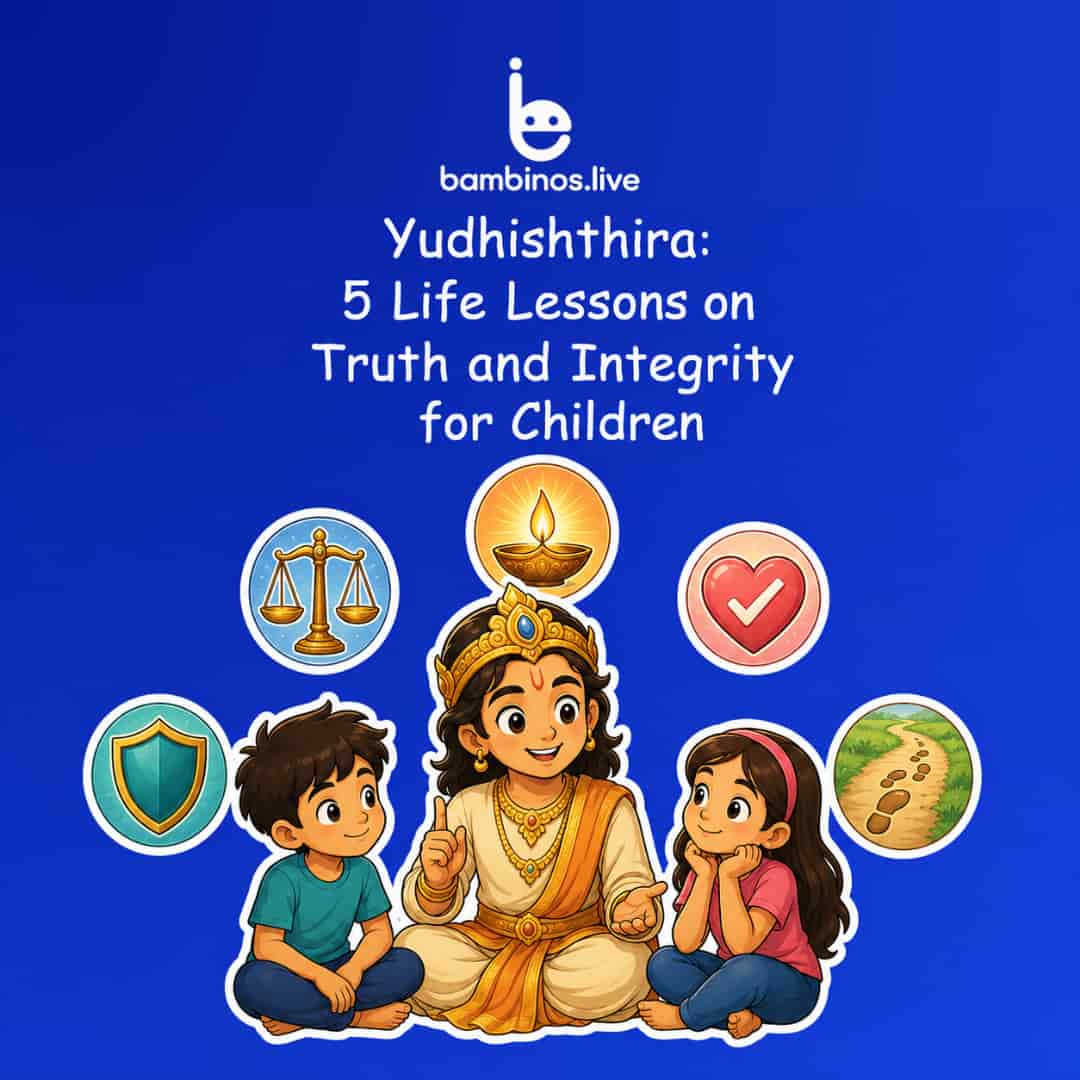
Stories from the Mahabharata have been passed down through generations, not just because they are exciting, but because they teach children important values for life. Among its many unforgettable characters, Yudhishthira, the eldest of the Pandavas, is especially known for his commitment to truth, duty, and righteousness.
Yudhishthira was not a perfect person. Like everyone, he faced difficult choices, made mistakes, and sometimes struggled to follow his principles. That is what makes his story meaningful for children. His life shows that doing the right thing is not always easy, but our choices reveal our character.
For parents looking for meaningful Mahabharata stories for children, Yudhishthira's journey offers several simple and powerful lessons. Here are five life lessons children can learn from the life of Yudhishthira.
Who was Yudhishthira?
Yudhishthira was the eldest of the five Pandavas, Yudhishthira, Bhima, Arjuna, Nakula, and Sahadeva. He was the son of Kunti and was associated with Dharma, the principle of righteousness and duty.
As the eldest Pandava, Yudhishthira often carried the responsibility of protecting and guiding his younger brothers. His character traits included patience, honesty, compassion, responsibility, and a strong sense of justice.
He was widely respected for his love of truth. However, his story also reminds us that integrity is tested most when life becomes difficult.
1. Always value the truth
One of the most important life lessons from Yudhishthira is the importance of truth.
Yudhishthira was famously committed to speaking the truth. In the Mahabharata, his reputation for honesty became so strong that even his enemies knew that his words could generally be trusted.
For children, this lesson can be very simple: tell the truth, even when telling the truth feels difficult.
Imagine a child accidentally breaking a favourite cup at home. They might feel tempted to blame someone else because they are afraid of being scolded. But admitting the mistake takes courage.
That is where the story of Yudhishthira and truth becomes relevant. Honesty does not mean that we will never make mistakes. It means that we have the courage to accept them.
Parents can teach children that telling the truth may sometimes bring an uncomfortable conversation, but lying can create bigger problems later.
2. Integrity means doing the right thing
Truth and integrity are closely connected, but they are not exactly the same.
Truth means being honest in what we say. Integrity means trying to do what is right even when nobody is watching.
Yudhishthira's life provides many examples of how difficult it can be to follow one's principles. He constantly had to make choices involving his family, responsibilities, promises, and dharma.
For children, Yudhishthira and integrity can be explained through everyday situations.
If a child finds money on the classroom floor, integrity means giving it to the teacher rather than secretly keeping it. If they see a classmate being treated unfairly, integrity means speaking up respectfully.
These small choices help children understand that character is built through everyday actions.
3. Take responsibility for your actions
Another valuable lesson from Yudhishthira's life is responsibility.
As the eldest Pandava, Yudhishthira had responsibilities toward his brothers and family. He was expected to make thoughtful decisions and consider how his choices could affect others.
However, the Mahabharata also shows that even good people can make poor decisions. Yudhishthira's decision to participate in the dice game eventually had serious consequences for the Pandavas.
This part of the story is particularly useful when teaching children.
Being responsible does not mean pretending that we never make mistakes. It means accepting the consequences of our decisions and learning from them.
A child who forgets to complete their homework can blame the teacher, the school, or a sibling. A more responsible response is, "I forgot to do it, and I will make sure I plan better tomorrow."
This is one of the most practical moral lessons from Mahabharata: mistakes can become opportunities to grow.
4. Stay calm during difficult situations
Yudhishthira was known for his patience and calm nature. While his brothers, particularly Bhima, were often more impulsive and emotional, Yudhishthira generally tried to think before reacting.
Children experience many situations where emotions can take control. They may become angry when they lose a game, frustrated when they cannot solve a maths problem, or upset when a friend says something unkind.
The story of Yudhishthira can help children understand that being strong does not always mean being loud or aggressive.
Sometimes strength means taking a breath, thinking carefully, and choosing a peaceful response.
This is one reason Yudhishthira stories for kids can be valuable. They provide children with examples of how patience and self-control can help when situations become complicated.
5. Follow dharma, but learn from your mistakes
The concept of dharma is an important part of the Mahabharata. For children, it can be explained simply as understanding one's responsibilities and trying to choose what is right and fair.
Yudhishthira spent much of his life trying to follow dharma. Yet his journey was not free from mistakes or difficult decisions.
That makes his character more realistic and relatable.
Children do not need to believe that being good means being perfect. Instead, they can learn that having good values means trying to make better choices, accepting mistakes, and improving.
For example, if a child hurts a friend's feelings, simply saying "sorry" is a beginning. They can also think about what happened, understand why their words were hurtful, and try not to repeat the behaviour.
That is how values become part of everyday life.
What can children learn from Yudhishthira's character?
Children can learn honesty, integrity, responsibility, patience, and respect from Yudhishthira's character. His story also teaches children to think before making decisions, accept their mistakes, and try to choose what is right. These values can help children make better choices at home, at school, and with their friends.
The story of the eldest Pandava Yudhishthira offers several values that remain relevant today:
- Honesty: Tell the truth even when it is uncomfortable.
- Integrity: Do the right thing even when nobody is watching.
- Responsibility: Accept the consequences of your choices.
- Patience: Think before reacting when emotions are strong.
- Dharma: Try to choose what is fair, responsible, and right.
- Learning from mistakes: Understand that mistakes can teach us valuable lessons.
- Respect for others: Consider how our actions affect the people around us.
These are not just lessons from an ancient story. They are values children can practice at home, in school, with friends, and eventually in their adult lives.
Making Mahabharata stories meaningful for children
When introducing Indian mythology stories for children, it is helpful to go beyond simply telling children who the heroes and villains were. Parents and teachers can use Short Stories from the Mahabharata for Kids to introduce important values through simple stories and ask questions that encourage children to think about the characters' choices and actions.
For example:
"What would you have done if you were Yudhishthira?"
"Why is it sometimes difficult to tell the truth?"
"What does being honest mean at school?"
"Can a good person make a mistake?"
Such questions turn a traditional story into a conversation about real-life values.
Children can also learn about the different personalities of the Pandavas. Bhima's strength, Arjuna's focus, Nakula and Sahadeva's qualities, and Yudhishthira's commitment to truth and dharma show that every person can have different strengths.
These lessons can also help children develop important life skills such as focus, responsibility, self-control, and decision-making, which are often explored through life skill courses.
Want to teach your child the values of truth and integrity?
The Mahabharata is much more than a story about the Pandavas and Kauravas. It is filled with characters and situations that encourage us to think about choices, relationships, responsibility, courage, truth, and morality.
Yudhishthira's life is especially meaningful when teaching children about honesty and integrity. His journey shows that following the right path is not always easy. There can be pressure, temptation, confusion, and mistakes along the way.
But perhaps that is the most important lesson of all.
Children do not have to be perfect to have strong values. They simply need to keep learning, take responsibility for their actions, speak honestly, and try to make the right choice.
Through Yudhishthira stories for kids, children can discover that the real strength of a person is not only in what they can achieve, but also in the values they choose to live by.
And that is why the lessons of Yudhishthira continue to remain relevant for children even today.
To teach the beautiful stories of the Bhagavad Gita, book a demo for Little Yogi classes in Bambinos.live, which offers easy-to-understand Bhagavad Gita lessons through interactive and joyful classes.
Frequently asked questions
1. Who was Yudhishthira?
Yudhishthira was the eldest of the five Pandavas in the Mahabharata. He was the son of Kunti and was associated with Dharma, the principle of righteousness and duty. He was known for his honesty, patience, sense of responsibility, and commitment to doing what was right.
2. What can children learn from Yudhishthira?
Children can learn honesty, integrity, patience, responsibility, and respect from Yudhishthira's life. His story also shows that making mistakes does not make someone a bad person. Children can learn to accept their mistakes, understand their consequences, and try to make better choices.
3. Why was Yudhishthira known for telling the truth?
Yudhishthira was known for telling the truth because he strongly valued honesty and dharma. His reputation for truthfulness made others trust his words. His story teaches children that telling the truth can sometimes be difficult, but honesty helps build trust.
4. What does dharma mean for children?
Dharma means understanding one's responsibilities and trying to do what is right and fair. Children can understand this idea through simple situations at home and school. Helping others, keeping promises, accepting responsibility, and treating people fairly are ways children can practice these values.
5. What mistake did Yudhishthira make?
Yudhishthira made a serious mistake by taking part in the dice game. His decision led to difficult consequences for the Pandavas. His story helps children understand that even people who have good qualities can make poor decisions and should learn from what happens next.
6. Why are Yudhishthira stories useful for children?
Yudhishthira stories help children learn about honesty, patience, responsibility, and self-control. The situations in his life can be connected with things children experience at home, in school, and with friends. Parents and teachers can use these stories to start simple conversations about making good choices.
7. How can parents teach children about Yudhishthira's values?
Parents can teach Yudhishthira's values by connecting his stories with everyday situations. They can ask children what they would do in a similar situation and why. Simple questions about telling the truth, accepting mistakes, and helping others can make the story easier for children to understand.
8. Does Bambinos.live offer Bhagavad Gita classes for children?
Bambinos.live offers Little Yogi classes that teach children the stories and lessons of the Bhagavad Gita. The classes explain these stories in a simple way and use interactive activities to keep children involved. Children can learn about the teachings of the Bhagavad Gita while enjoying the learning experience.
9. What makes Bambinos.live useful for learning Indian mythology?
Bambinos.live helps children learn Indian mythology through interactive classes and stories. The lessons introduce traditional stories and the values found in them in a way children can follow. Little Yogi classes also help children explore stories from the Bhagavad Gita through activities and discussions.
10. Can children learn from Yudhishthira's mistakes?
Children can learn that making mistakes is a part of learning from Yudhishthira's story. His journey shows that people can make difficult or wrong choices and still reflect on what happened. Children can learn to accept responsibility, understand their actions, and try to make better choices in the future.
About the Author

Soumi Dey
AuthorSoumi is an accomplished Gita, Mathematics and English educator who is also passionate about writing articles and stories. She creates a positive and engaging learning atmosphere. She uses her knowledge to guide each student through their educational journey, ensuring they feel confident and motivated. She emphasises and focuses on each and every learner's needs, helping them build a strong foundation and unlock their full potential.
LinkedIn Profile ↗